

Autumn gales and wind-driven rain can put extra strain on an external bifold doorset. Water may overwhelm or expose a drainage issue; leaves and grit can collect in the track; and panels caught by gusts may slam, stressing hinges, rollers and locking points. Seals can also lift or shift, leaving gaps for draughts and rain.
Once conditions are safe, a careful check can help identify what needs attention before winter. Do not force a door that feels different after a storm. A simple obstruction may be easy to clear, but dragging, grinding or persistent water needs a closer diagnosis.
What a storm can do to external bifold doors
A bifold doorset is a connected system: panels, hinges, rollers, tracks, seals, drainage and locking points all affect one another. Storm damage may not be obvious at first.
Look out for:
- Water in or around the threshold: wind-driven rain can reach areas that stay dry in calmer weather. Water in a track should drain; persistent standing water or water entering the room needs investigation.
- Debris in the running track: leaves, grit and small stones can obstruct rollers and make panels drag or grind.
- Stress to hinges and panels: a panel caught and slammed by a gust may shift, strain a hinge or affect how the panels meet.
- Displaced seals: wind can lift or pull a weather seal from position, reducing its contact with the frame and allowing draughts or rain through.
- Changed alignment: uneven gaps, a dropped panel or new resistance may indicate that the panel or its hardware has moved.
Your safe post-storm checklist
Only inspect the doors once the weather has settled and it is safe to approach them. Keep children and pets away from the opening, and do not climb, dismantle hardware or attempt adjustments.
1. Operate the doors slowly, and stop if they resist
If the doorset appears undamaged, try moving it slowly through its normal operation. Do not slam the panels or force them past resistance. Stop if you hear grinding, feel dragging, or notice a panel catching. Repeated attempts may put more strain on the running gear.
A panel that now feels heavier or moves unevenly should be assessed before normal use resumes.
2. Clear loose debris from the track
Remove accessible leaves, grit and loose debris from the track using a soft brush or vacuum. Avoid sharp tools that could damage the track, rollers or seals. Do not dismantle components to reach debris lodged inside the mechanism.
Clean tracks help rollers move as intended. For further seasonal care, see our guide to winter-proofing your bifold doors in 5 steps.

3. Check visible drainage outlets
Look for visible drainage slots or outlets along the threshold and check that leaves or dirt are not covering them. Do not probe deeply into concealed channels, drill holes or seal over an outlet. The drainage route is part of the doorset’s design, and altering it could make matters worse.
Some water may collect briefly in the track during driving rain, but it should be able to drain away. If water remains pooled after the rain has stopped, or appears on the inside floor, arrange a professional inspection. Clear drainage paths matter to bifold door performance, which is why our 7-point autumn maintenance check includes them.
4. Look for displaced seals and uneven gaps
Check the visible seals around the panels and threshold. Look for a seal pulled out of place, a split or damaged section, or a gap that was not there before. Also compare the gaps between panels and around the frame: a visibly uneven line may indicate that a panel has shifted or dropped.
Avoid stretching or cutting seals to make them fit. A specialist can establish whether the seal has moved or whether a change in panel alignment is affecting how it sits.
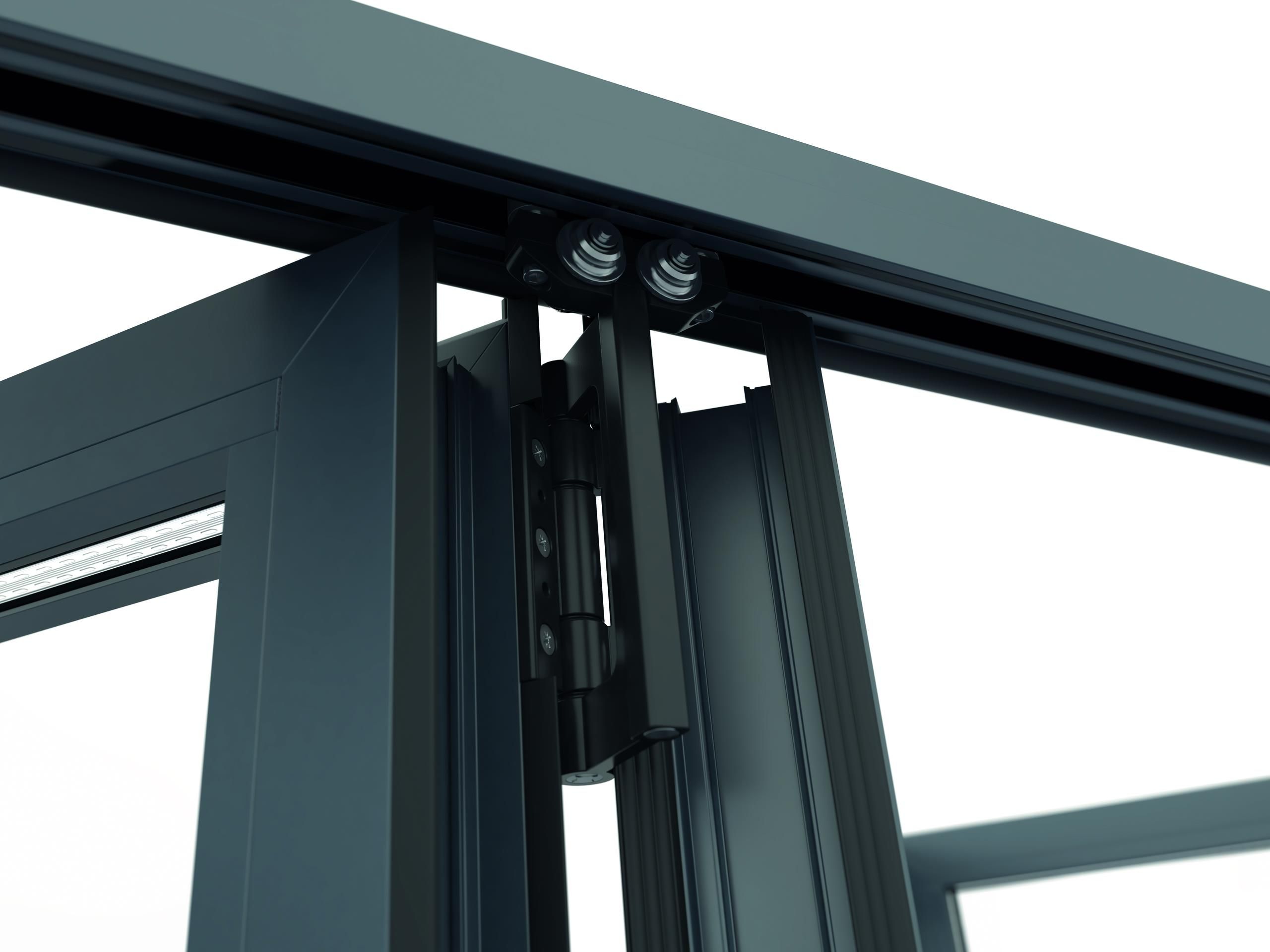
5. Test the handle and locking points gently
With the panels in their normal closed position, try the handle and locking points gently. If they feel stiff or do not line up, do not force the handle. A panel that has shifted can leave the locking points misaligned with their keeps; the fault may be mechanical alignment rather than a failed lock.
That relationship needs checking as part of the doorset, not by repeatedly lifting the handle or adjusting hardware without knowing the cause.
6. Check the threshold after rain
After rainfall, look for water that remains pooled at the threshold. Note whether the water is outside, in the track or inside the property. A photograph can help show where it collects and whether the amount changes after the rain stops.
Water that does not drain, recurring ingress, or visible damage to the track or frame is a reason to contact a bifold door specialist rather than relying on sealant or an improvised fix.
When does a fault need a specialist?
A homeowner check is useful for identifying obvious debris or a visible seal problem. Mechanical faults need a more complete assessment, as one symptom can have several causes.
Contact a specialist if you notice:
- A panel that drags, grinds, catches or has dropped.
- Stiff locking points that may be caused by panel misalignment.
- A track that appears bent, loose or damaged.
- Water that continues to pool or enters the home after rain.
- Seals that have been displaced or damaged by the wind.
- New uneven gaps, damaged hinges or a panel that no longer sits correctly.
A repair may involve clearing or realigning components, replacing a worn roller or hinge, re-setting panel alignment, or fitting a suitable seal. Pro-Lock assesses the connected doorset to find the cause before recommending work. See our bifold door repair services and how the assessment works.
Repair or bifold door track replacement?
Not every track-related problem means the track needs replacing. Debris, worn rollers or misalignment can make a sound track feel faulty. In those cases, cleaning, adjustment or a suitable component repair may restore smooth movement without replacing the track.
Bifold door track replacement may be appropriate where the track itself is damaged or distorted, or cannot be restored to reliable operation. The Pro-Lock team checks the track alongside the rollers, hinges, panel position and frame before advising whether a repair or replacement section is needed. The aim is to restore the existing doorset where a suitable repair is practical, not to recommend replacement without first assessing the fault.
Pro-Lock does not sell new doors, so our advice is focused on the condition of your existing doors and how to prolong their service life.

Arrange an assessment before winter
If your storm check suggests a mechanical fault, avoid repeated operation and arrange a professional assessment. The professional assessment is £79, which is credited against the cost of the repair if you proceed, and refunded if suitable parts cannot be sourced or the doorset is beyond economical repair. You receive a written report and itemised quotation to review before deciding whether to proceed. Completed repairs are covered by a full 12-month warranty on the work carried out and applicable parts supplied and fitted.
Pro-Lock repairs and maintains external bifold doors only, including aluminium, uPVC, timber and hybrid doorsets. Internal bifold doors, such as wardrobes, cupboards and room dividers, are not covered.
We provide external bifold door repair across exactly thirteen counties: Norfolk, Suffolk, Cambridgeshire, Bedfordshire, Essex, Hertfordshire, Surrey, Kent, East Sussex, West Sussex, Lincolnshire, Northamptonshire and Leicestershire. In West Sussex, coverage includes Worthing and the coastal areas around Chichester Harbour, plus Crawley, Horsham, East Grinstead, Haywards Heath, Bognor Regis and surrounding areas. London is excluded from coverage.
Not sure whether your issue is a simple obstruction or a fault that needs repair? Contact the Pro-Lock team on 0330 311 0975, email enquiries@bifold-door-repair.co.uk, or contact the Pro-Lock team via WhatsApp. Describe what changed after the storm and where you are based, and we’ll explain the next step.