

Summer is coming to an end, and many homeowners are beginning to keep their external bifold doors closed rather than opening them onto the garden every day.
That is often when the niggles become obvious.
A door that dragged slightly in July may now feel stiff. A lock that needed a little extra pressure may become difficult to operate in cold, damp weather. Small gaps around worn seals can turn into noticeable draughts, while blocked drainage channels may allow autumn rain to sit in the track.
The best time to address these problems is before the first frost and before winter weather places additional strain on the door system.
This five-step checklist covers the practical maintenance checks that can help restore smooth operation, reduce draughts and protect your external bifold doors through autumn and winter.
Important: Pro-Lock specialises in the repair, servicing and maintenance of external bifold doors made from aluminium, uPVC, timber or hybrid materials. We do not repair internal bifold doors such as wardrobe, cupboard, storage or room-divider systems.
Step 1: Clean the Tracks and Clear the Drainage
External bifold door tracks are exposed to summer dust, grit, pet hair, leaves and garden debris. Even a small stone can affect the movement of a heavy glazed panel or place additional load on the rollers.
Before the wetter months arrive, inspect and clean the full length of the bottom track.
What to check
- Grit and stones lodged around the rollers
- Leaves and organic debris in the corners
- Dirt compacted into the drainage channels
- Standing water after rainfall
- Blocked weep holes or drainage slots
- Sealant, paint or patio debris covering drainage outlets
Use a vacuum cleaner with a narrow nozzle to remove loose debris. Then wipe the track with warm water and a mild detergent using a soft cloth or soft brush. Avoid abrasive pads, sharp tools and aggressive chemicals, particularly on powder-coated aluminium.
External bifold doors are designed with drainage channels and weep holes to allow water to escape. These must remain clear. A blocked drainage outlet can leave water sitting in the track, increasing the risk of corrosion, seized rollers and water ingress.
You can read more about this problem in our guide to bifold door tracks holding water.
✅ Pro-Lock solution: If water continues to pool after cleaning, the issue may involve a blocked internal channel, damaged track, poor drainage fall or misalignment. These are problems that require specialist investigation rather than repeated surface cleaning.

Step 2: Inspect the Seals and Stop Draughts
Door seals and gaskets work hard throughout the year. During summer, ultraviolet exposure, heat and frequent opening can cause rubber seals to flatten, shrink, crack or become brittle.
Once the doors are closed for autumn, worn seals can become much more noticeable. You may feel cold air around the panel edges, where the doors meet or along the threshold.
Look for these warning signs
- Cracked, split or hardened rubber
- Sections that have pulled away from the frame
- Flattened seals that no longer spring back
- Gaps between panels
- Draughts around the threshold
- Water marks or evidence of wind-driven rain
- Seals catching or folding when the doors close
Clean the seals gently with mild soapy water and a soft cloth. Do not use solvent-based products, harsh chemicals or unsuitable oils, as these can accelerate deterioration.
If a seal is worn, replacing it with a generic product may not solve the problem. Bifold door seals are often specific to the make, model and frame profile. The wrong gasket can sit too tightly, leave gaps or interfere with the door’s closing and locking action.
Our guide explains why choosing the correct bifold door seal matters.
✅ Pro-Lock solution: We can identify worn or unsuitable seals, check the underlying alignment and fit the appropriate replacement where available. Correctly fitted seals can help reduce draughts, rattles and moisture ingress while prolonging the life of the doors.
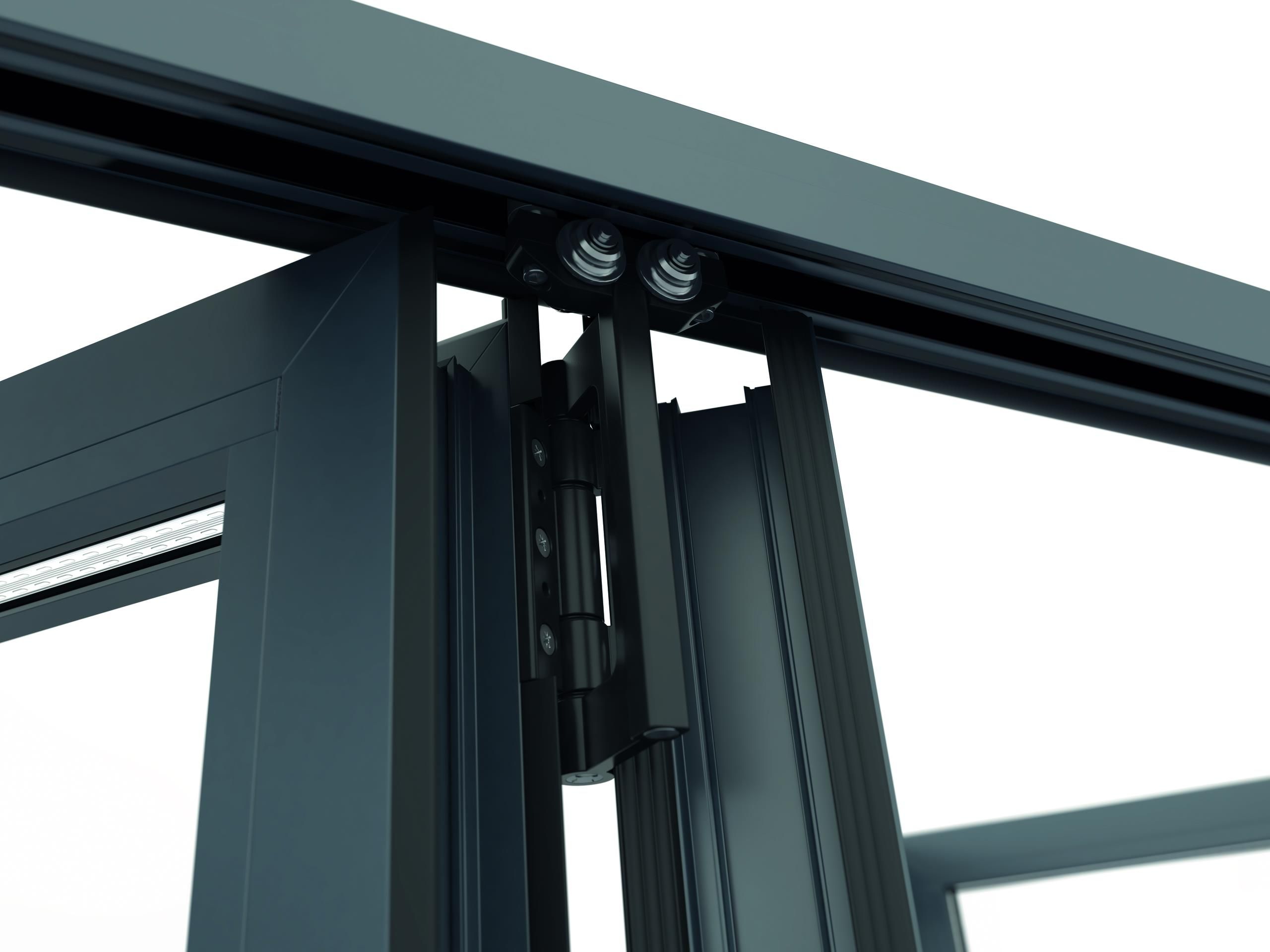
Step 3: Check Alignment, Rollers and Hinges
Heavy glazed bifold panels can move slightly over time. This may happen through regular use, settlement, loose fixings, wear in the rollers or stress placed on the hinges.
The movement may initially be subtle. Perhaps the lead panel catches at the bottom, the doors do not fold neatly, or you need to lift a handle before the lock engages. These are signs that the system may need to be realigned before colder weather makes the problem worse.
Test the doors carefully
Open and close the doors slowly, paying attention to:
- Dragging at the bottom
- Grinding or crunching sounds
- Stiff movement across the track
- Panels catching against one another
- Uneven gaps at the top or bottom
- Excessive movement in the hinges
- A lead door that does not sit squarely in the frame
A small alignment issue can create a chain reaction. When one panel is not correctly supported, the rollers, hinges, seals and locking points may all experience additional stress.
For more information, see our specialist guide to dragging bifold door repairs.
You can clean accessible hardware and apply a suitable lubricant in accordance with the door manufacturer’s recommendations. A light silicone-based product is generally preferable to heavy grease or tacky oil, which can attract grit and turn into an abrasive paste.
Do not attempt to force a dragging door or adjust concealed hardware without knowing the system. Incorrect adjustment can damage the track, rollers, hinges or glass setting.
✅ Pro-Lock solution: Our engineers assess the relationship between the panels, rollers, hinges, tracks and frame before carrying out precision realignment or component repairs. In many cases, restoring the existing mechanism is considerably more cost-effective than replacing the doors.
Step 4: Service the Locks and Keeps Before Frost
Autumn and winter are not the ideal time to discover that your multipoint lock is already under strain.
Cold temperatures and moisture can make an existing fault more apparent. A lock that was slightly stiff during summer may become difficult to turn, while a misaligned door may prevent the locking bolts from entering the keeps correctly.
Test your locking system
With the doors closed, check that:
- The handle moves smoothly without excessive force
- The key turns without jamming or resistance
- The locking bolts engage fully
- The door sits firmly against the seals
- The keeps are securely fixed
- The handle does not need to be lifted aggressively
- You are not having to push, pull or lift the door to lock it
Never force a stiff handle or key. Doing so can damage the internal gearbox, spindle or cylinder and may leave the home insecure.
A lock problem is not always a lock problem. Misalignment, worn rollers, loose hinges or seal interference can all prevent the locking points from lining up. Replacing the cylinder alone will not correct an underlying mechanical fault.
Pro-Lock can carry out bifold door lock repairs, replace worn components and upgrade lock cylinders where appropriate.
✅ Peace of mind: A properly operating lock is essential for home security, particularly when the doors are closed for longer periods during darker autumn and winter evenings.
Step 5: Check for Condensation and Prepare for Colder Weather
Condensation on the inside of external bifold door glass is usually caused by warm, moist indoor air meeting a colder surface. It is not necessarily evidence that the door is faulty, but persistent condensation should not be ignored.
Practical ways to reduce condensation
- Use kitchen and bathroom extractor fans
- Improve ventilation when cooking, washing or drying clothes
- Keep trickle vents open if your home has them
- Wipe away excess moisture rather than allowing it to run into the frame
- Use thermal blinds or curtains overnight
- Check the perimeter seals and glazing gaskets
- Look for moisture between double-glazed panes, which may indicate a failed sealed unit
Good seals, correct alignment and clear drainage will help your doors manage autumn rain and cold conditions. However, ventilation remains important because doors alone cannot remove excess humidity from the home.
If you notice water entering around the threshold, do not simply place a towel against the inside of the door. Check the drainage outlets and arrange a professional inspection if the issue persists.
When Should You Call a Bifold Door Specialist?
A seasonal clean is sensible preventative maintenance, but some faults should be assessed professionally.
Contact a specialist if your external bifold doors:
- Drag, stick or grind when opening
- Will not close squarely
- Are becoming increasingly difficult to lock
- Let in noticeable draughts
- Have damaged or missing seals
- Hold water in the bottom track
- Show corrosion around rollers, hinges or fixings
- Have panels that appear to be dropping
- Require force to operate
At Pro-Lock, every job begins with a professional assessment. The standard assessment fee is £79, covering the engineer’s time, travel and diagnosis. This fee is fully refundable against the cost of any repair you choose to proceed with.
You will receive honest, jargon-free advice and a clear written quotation before repair work begins. There are no hidden charges and no pressure to replace a door unnecessarily.
All completed repair work is backed by a 12-month warranty on parts and labour, providing additional confidence through the winter months.
Specialist External Bifold Door Repairs Across the East and South East
The Pro-Lock team provides external bifold door repair, maintenance and servicing across:
- Norfolk: Norwich, King’s Lynn, Great Yarmouth, Cromer and surrounding areas
- Suffolk: Ipswich, Bury St Edmunds, Lowestoft and surrounding areas
- Cambridgeshire: Cambridge, Peterborough, Ely and surrounding areas
- Essex: Chelmsford, Colchester, Braintree, Brentwood, Southend-on-Sea and surrounding areas
- Kent: Canterbury, Maidstone, Ashford, Whitstable and surrounding areas
- East Sussex: Lewes, Eastbourne, Hastings, Bexhill-on-Sea, Uckfield and surrounding areas
We work with major external bifold door systems in aluminium, uPVC, timber and hybrid materials.
Sort the Niggles Before the First Frost
Your bifold doors may still be usable today, but small issues rarely improve by themselves. Grit, worn seals, poor alignment and stiff locks can develop into more expensive failures when exposed to cold, damp and heavy winter use.
✅ Clean the tracks
✅ Clear drainage holes
✅ Check and replace worn seals
✅ Test the rollers, hinges and alignment
✅ Service the locks and keeps
✅ Address condensation and draughts early
Pro-Lock does not sell new doors, so our advice is unbiased and focused on restoring and prolonging the life of your existing external bifold doors.
Call 0330 311 0975, email enquiries@bifold-door-repair.co.uk, or book your £79 assessment online.
Get the niggles sorted now, before the first frost turns them into bigger problems.