

When summer ends, many homeowners stop opening their external bifold doors every day. That is often when small problems become obvious.
A panel that dragged slightly in July may now feel stiff. A handle may require extra pressure before the lock engages. Cold air may be entering around tired seals, while condensation and standing water become more noticeable in the wetter autumn weather.
A sensible bifold door maintenance check can identify early symptoms before frost, moisture and further use place additional strain on the running gear.
This seven-point guide explains what you can safely check yourself and which faults should be assessed by a bifold door specialist.
Important: Pro-Lock specialises in repairing and maintaining external bifold doors only, including aluminium, uPVC, timber and hybrid systems. Internal bifold doors, including wardrobes, cupboards, storage doors and room dividers, are not covered.
1. Clean the tracks and threshold
The bottom track is exposed to grit, leaves, dust, pet hair and garden debris. Even a small stone can obstruct a roller or increase friction beneath a heavy glazed panel.
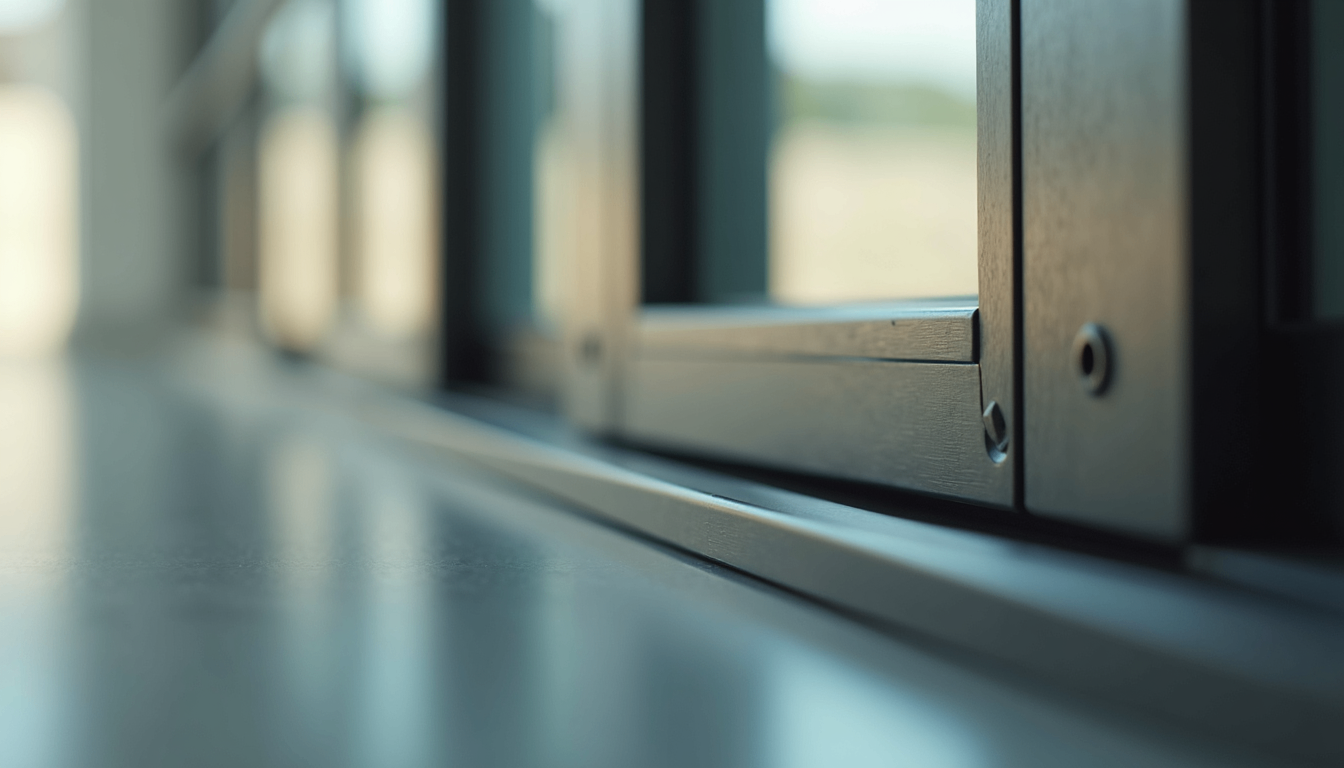
What you can check yourself
- Vacuum the full length of the track using a narrow nozzle.
- Remove leaves and loose debris from the corners.
- Wipe the track with warm water and a mild detergent.
- Use a soft cloth or soft brush rather than a sharp tool.
- Check whether water is collecting in the threshold after rain.
Avoid abrasive pads, aggressive chemicals and heavy grease. These can damage finishes or attract more grit.
A clean track may resolve minor stiffness. However, if the door still drags after cleaning, the cause may be worn rollers, a dropped panel, track damage or incorrect alignment.
✅ Specialist remedy: Pro-Lock can inspect the track and running gear together rather than assuming the track is the only problem.
2. Clear drainage channels and weep holes
External bifold doors are designed to manage rainwater through drainage channels and weep holes. When these become blocked, water can remain around the threshold and rollers.
Look for:
- Blocked drainage slots
- Leaves or insect debris inside channels
- Standing water after rainfall
- Dirt or sealant covering an outlet
- Signs of corrosion around the track or fixings
You can gently clear accessible drainage openings and clean away surface dirt. Do not push wire, screwdrivers or other objects deep into the frame, as this may damage concealed drainage paths.
Persistent water retention needs further investigation. It may indicate an internal blockage, damaged track, poor drainage fall or a problem caused by the doorset’s alignment.
✅ Why act now: Wet debris and standing water can accelerate wear in rollers, hinges and other mechanical components before the colder months arrive.
3. Inspect the seals for draughts
External seals work continuously against rain, wind, temperature changes and sunlight. Over time, rubber gaskets and brush seals can flatten, shrink, split or pull away from the frame.
Once the doors remain closed for longer periods, draughts are easier to detect.
Check for:
- Cracked or hardened rubber
- Flattened seals that no longer spring back
- Gaps at the junction between panels
- Loose sections around the frame
- Draughts along the threshold
- Water marks or evidence of wind-driven rain
- Seals folding or catching as the panels close
Clean the seals carefully with mild soapy water and a soft cloth. Avoid solvents and unsuitable oils, which can damage some seal materials.
A generic replacement gasket is not always suitable. Bifold door seals can vary according to the manufacturer, panel profile and door configuration. The wrong seal may prevent the panels closing correctly or create new pressure on the locking line.
✅ Specialist remedy: We can trace whether the draught is caused by a failed seal, panel movement, closure pressure or a combination of faults before recommending replacement seals.
4. Test bifold door alignment, rollers and hinges
This is the point at which homeowners often search for “how to fix dragging bifold door”. The important distinction is between a basic cleaning issue and a mechanical alignment fault.
Open and close the external bifold doors slowly. Do not force them or lift a panel while operating it.
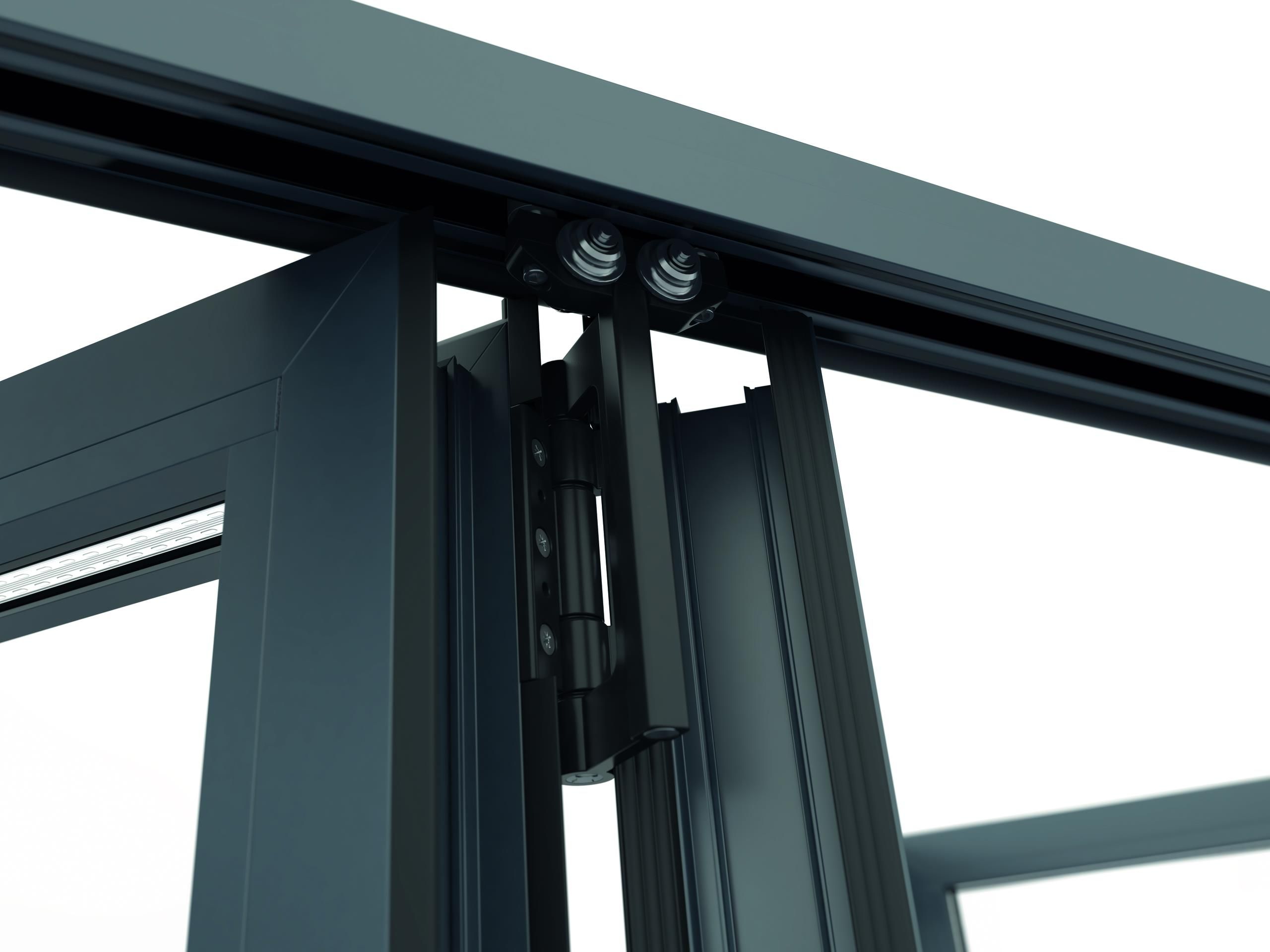
Note any of the following:
- Dragging at the bottom
- Grinding, crunching or clicking sounds
- Panels catching one another
- Uneven gaps at the top or bottom
- A lead panel sitting lower than the frame
- Excessive movement around hinges
- Panels failing to fold or stack neatly
- The door needing to be lifted to close
Several components work together in a bifold doorset. A worn roller may be the visible symptom, but the underlying cause could involve a hinge, track, panel support, frame movement or glazing adjustment.
This is why replacing one roller without checking the full doorset may provide only a temporary improvement.
✅ Leave these tasks to a specialist: Concealed roller adjustments, panel realignment, hinge replacement and glazing support work require the correct system knowledge. Incorrect adjustment can increase stress on the track, glass setting and locking hardware.
Pro-Lock provides bifold door rollers repair and alignment-led repairs where the existing doorset can be restored.
5. Lubricate suitable moving parts carefully
Seasonal maintenance may include lubrication of hinges, pivots, guides and other accessible moving parts. Always follow the door manufacturer’s recommendations.
A light silicone-based product is generally preferable to heavy grease, which can collect grit and create an abrasive paste. Do not spray indiscriminately into tracks or onto seals.
Safe maintenance means:
- Cleaning dirt away before applying any product
- Using only a small amount of suitable lubricant
- Keeping spray away from glass and decorative finishes
- Avoiding lubrication as a substitute for alignment
- Stopping if a component remains stiff or noisy
If lubrication makes little difference, the issue is unlikely to be simple friction. Continued force can damage a roller, hinge or track.
✅ Pro-Lock solution: We assess whether the mechanism needs cleaning, lubrication, adjustment or component repair, helping to avoid unnecessary replacement.
6. Operate the locks without forcing them
A bifold door that is difficult to lock often has an alignment problem elsewhere. The panels may not be sitting squarely, the keeps may be out of line, or a worn roller or hinge may be preventing the correct closure position.
This is a mechanical issue, not necessarily a failed lock.
Check that:
- The handle moves smoothly
- The locking points engage without excessive force
- You do not need to push, pull or lift the panel
- The door closes evenly against its seals
- The handle returns to its normal position
- The keeps and strike plates appear firmly fixed
Never force a stiff handle. This can place unnecessary load on the gearbox, spindle and other connected components.
A cylinder or handle replacement alone will not resolve a doorset that is sitting out of alignment. The complete relationship between panels, hinges, rollers, keeps and seals should be checked.
✅ Specialist remedy: Pro-Lock can diagnose difficult closure and locking faults as part of a complete external bifold door assessment.
7. Check condensation and moisture patterns
Condensation on the room-facing surface of external bifold door glass is commonly caused by warm, moist indoor air meeting a cold surface. It does not automatically mean the doors are faulty.
However, persistent moisture deserves attention, particularly if it is accompanied by draughts, water around the threshold or gaps around the panels.
Practical steps include:
- Ventilating kitchens and bathrooms
- Using extractor fans when cooking or bathing
- Keeping trickle vents open where fitted
- Wiping excess moisture from the frame
- Checking seals and glazing gaskets
- Looking for moisture between double-glazed panes
- Confirming that external drainage points are clear
Correct alignment, intact seals and clear drainage can help the doors manage winter conditions. They cannot, however, remove excess humidity from the home.
If condensation is severe, water enters around the threshold or the glass appears misted between panes, arrange a professional inspection rather than relying on towels or surface cleaning.
When should you call a bifold door specialist?
Arrange specialist advice if your external bifold doors:
- Drag, stick or grind
- Have panels that appear to be dropping
- Catch the threshold or header
- Are becoming difficult to close or lock
- Let in noticeable draughts
- Have split, missing or unsuitable seals
- Hold water in the bottom track
- Show corrosion around rollers or hinges
- Need force to operate
At Pro-Lock, the professional assessment is £79. You receive a complete inspection, followed by a written itemised quote explaining the recommended work. The £79 assessment is refundable against the repair cost if you proceed.
Completed repairs are covered by a 12-month warranty on the work carried out and applicable parts supplied and fitted.
Because we do not sell new doors, our advice is focused on restoring and prolonging the life of your existing external bifold doors wherever a suitable repair is possible.
External bifold doors repair near me: our service area
The Pro-Lock team provides specialist external bifold door repair, servicing and maintenance across exactly ten counties:
West Sussex coverage includes Worthing and the coastal areas around Chichester Harbour, as well as Crawley, Horsham, East Grinstead, Haywards Heath, Bognor Regis and surrounding areas.
London is excluded from coverage.
See the full service area or read how the assessment process works.
Book your autumn bifold door assessment
Do not wait for a dragging panel, stiff mechanism or draught to become a larger winter repair.
✅ Clean the tracks and threshold
✅ Clear accessible drainage outlets
✅ Inspect seals and condensation patterns
✅ Test alignment, rollers and hinges carefully
✅ Avoid forcing difficult locks
✅ Arrange specialist help for persistent faults
Call 0330 311 0975, email enquiries@bifold-door-repair.co.uk, or contact the Pro-Lock team via WhatsApp.
A diagnosis-led autumn check can restore smooth operation, reduce draughts and help prolong the service life of your external bifold doors.