

As autumn turns to winter, rain, leaves and colder temperatures can reveal faults that are easy to miss in summer. A door may start dragging, a panel may no longer sit squarely, or the handle may need extra pressure to operate.
A homeowner’s check can identify obvious symptoms. A professional pre-winter service goes further: it assesses the complete doorset mechanically, looks for underlying causes and checks how connected components work together.
This is the professional-service counterpart to our seven-point autumn bifold door check. That guide covers sensible visual checks and basic care you can do yourself. Here, we explain what a specialist can assess beyond the visible surfaces.
Pro-Lock repairs external bifold doors only: aluminium, uPVC, timber and hybrid. Internal bifold doors, including wardrobes, cupboards and room dividers, are not covered.
Why a professional service is different from a DIY check
Cleaning accessible tracks, observing how the panels move and noting visible seal damage are useful first steps. But these checks cannot reliably show what is happening inside a roller assembly, behind a threshold or within a glazed panel.
A service considers the doorset as a connected mechanical system. A door that catches, for example, may have worn running gear, panel misalignment, hinge wear or a glazing-support issue. Adjusting one visible part without diagnosing the cause may leave the fault in place, or add strain elsewhere.
The aim is to identify what can be cleaned, adjusted, repaired or replaced, and whether the existing doorset can be restored rather than replaced.
What a professional pre-winter bifold door service covers
1. Operation through the full opening and closing cycle
The engineer operates the panels through their normal sequence, observing movement as the glazed weight is carried. Checks include whether the panels glide, fold and meet as intended, and whether any point in the cycle brings resistance, scraping, clicking or grinding.
This helps distinguish a simple obstruction from a mechanical fault. A panel can appear properly positioned when stationary but bind as it moves.
2. Rollers, bearings and running gear
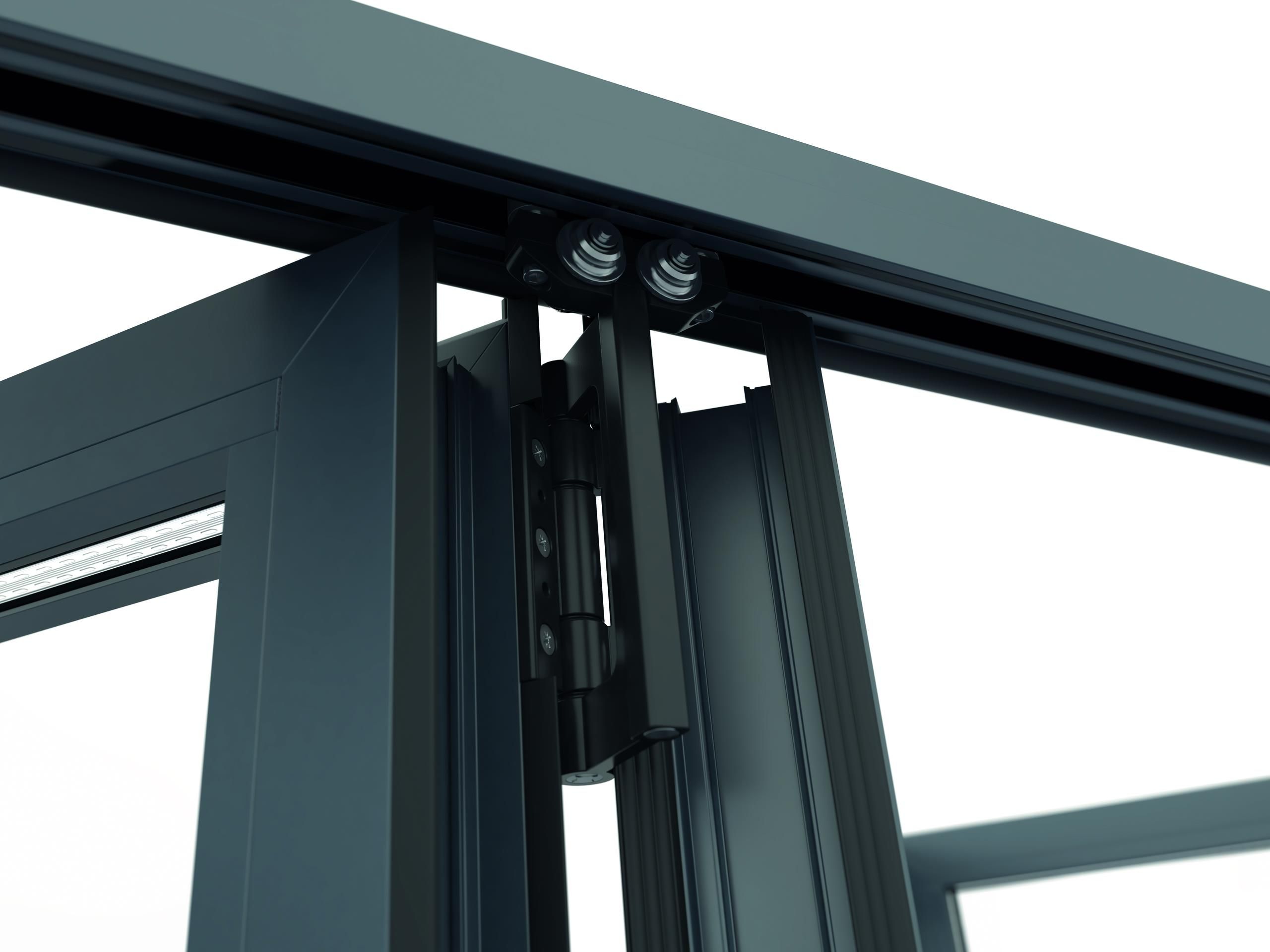
Rollers are checked in context with the rest of the running gear. The inspection looks for wear, damage, looseness or irregular movement that could affect how the panel travels.
A worn bearing may feel rough or make a noise only when the panel is under load. It is not always possible to identify that fault from a quick look at the exposed track. Pro-Lock’s specialist assessment helps establish whether the problem lies with a roller, its adjustment, or another connected part.
3. Track condition and subtle wear
The accessible track is checked for debris, damage and signs of wear along the roller’s route. Cleaning may resolve a problem caused by grit or leaves, but a clean-looking track does not rule out subtle wear or an issue with how the panel is travelling.
This distinction matters: repeatedly adjusting or replacing a roller without checking its contact with the track may not address the underlying cause.
4. Hinges, guides and panel alignment
Hinges and guides are assessed for wear, looseness or damage that may affect the folding sequence and panel position. The engineer also checks how panels sit in relation to the frame, threshold and each other.
Small alignment changes can be difficult to judge by eye. Yet they can affect smooth movement and closing pressure. A professional assessment looks at how the parts interact rather than treating each symptom separately.
5. Glazing support and toe-and-heel packers
Glazing packers support the glass within the panel. Correct toe-and-heel positioning, using system-specific packers to help keep the panel square and level, can be important where a panel has dropped, started dragging or no longer meets the frame as it should.
The packers are concealed within the glazed panel, so a homeowner’s visual check cannot confirm their position or whether they have shifted. Assessing or altering them involves specialist knowledge and should not be attempted as a routine DIY adjustment.
6. Drainage routes and threshold
A service checks the threshold and drainage route, including whether accessible outlets appear blocked and whether water is being retained or directed as intended. A surface may look clean while a blockage remains further inside the drainage path.
This is one reason surface cleaning alone cannot confirm that the doorset is draining properly. The professional check considers the route through the system, not just the visible opening.

7. Seals and closure contact
Seals are assessed for visible wear, damage or displacement, as well as how they meet when the panels close. If a seal is not making consistent contact, the cause may be a worn gasket, but it may also be panel position or closing pressure.
A complete assessment helps avoid replacing a seal unnecessarily when the underlying issue is alignment. Where a suitable seal repair is recommended, the right profile needs to match the doorset.
8. Mechanical operation of the handle and locking points
The handle, keeps and locking points are checked purely as mechanical components: whether they line up, engage and operate smoothly as the panels close. If the handle is stiff or the keeps do not meet correctly, the cause may be a panel sitting out of position rather than a fault isolated to the handle.
The service checks the mechanical relationship between these parts and the rest of the doorset. It does not rely on forcing the handle or making an adjustment without first understanding the alignment.
What a DIY check cannot safely confirm or fix
A homeowner can report symptoms and clean accessible areas, but some faults are concealed or require specialist assessment. These include:
- Worn roller bearings that become rough under the weight of a panel.
- Subtle track wear that is hard to distinguish from a dirty surface.
- Glazing packer or toe-and-heel issues inside a glazed panel.
- Internal drainage blockages beyond visible outlets.
- Hinge wear or abnormal loading between connected panels.
Lifting heavy glazed panels, dismantling running gear or changing concealed adjustments can risk further damage. If a panel drags, grinds, has dropped, or needs force to move, stop operating it and arrange an assessment rather than trying to compensate by lifting or pushing it.
Clear assessment, written quotation and repair-first advice
Pro-Lock’s professional assessment costs £79. The doorset is inspected, the findings are explained, and a written report and quotation set out any recommended repair work. The £79 fee is credited against the repair cost if you proceed, and refunded if suitable parts cannot be sourced or the doorset is beyond economical repair.
Completed repairs carry a full 12-month warranty. Pro-Lock does not sell new doors, so our advice is focused on the condition and repair options for your existing doorset. Where a suitable repair is possible, restoring it can be a practical alternative to replacing the whole system.
Local pre-winter assessments
The Pro-Lock team provides external bifold door repair across exactly sixteen counties: Norfolk, Suffolk, Cambridgeshire, Bedfordshire, Essex, Hertfordshire, Surrey, Kent, East Sussex, West Sussex, Lincolnshire, Northamptonshire, Leicestershire, Oxfordshire, Berkshire and Hampshire. London is excluded.
For local enquiries, see bifold door repair Berkshire, bifold door repair Hampshire and bifold door repair Oxfordshire. The team also provides bifold door repairs in Reading (Berkshire), Southampton (Hampshire) and Oxford (Oxfordshire). In West Sussex, coverage includes Worthing and the coastal areas around Chichester Harbour.
Arrange a pre-winter bifold door assessment
If your external doors are dragging, catching, operating unevenly or showing signs of a drainage or seal problem, contact Pro-Lock before the colder weather puts more strain on a fault.
Call 0330 311 0975, email enquiries@bifold-door-repair.co.uk, or send an enquiry through WhatsApp. You can also read how the assessment works or view all service areas.
✅ A complete mechanical assessment. A clear written quotation. Repair-first advice to help prolong the life of your existing doors.