

When the heating goes on for the first time, problems that went unnoticed during summer can become obvious almost immediately. You may feel cold air around the meeting stiles, notice condensation along the glass, or find that the room still feels uncomfortable despite the radiators running.
That does not automatically mean your external bifold doors are old or need replacing.
In many cases, the cause is a repairable combination of weather-seal wear, panel movement, alignment changes or tired running gear. A professional bifold door maintenance visit can often restore the seal, improve operation and prolong the life of the existing doorset.
Pro-Lock specialises in repairing external bifold doors made from aluminium, uPVC, timber and hybrid materials. Internal bifold doors, including wardrobe, cupboard, room-divider and storage doors, are not covered by this service.
Why draughts become more noticeable when the heating starts
Your home feels the difference between indoor and outdoor temperatures much more sharply in autumn and winter. Warm air rises and circulates through the room, while cold air can enter through even a small break in the door’s weather seal.
The large glazed area can also create a cold downdraught. Air next to cold glass cools, becomes denser and falls towards the floor. This can feel like a draught even when there is no actual gap admitting outside air.
The important distinction is whether you are experiencing:
- Genuine air leakage through a gap or failed seal.
- Heat loss through the glass or frame, creating a cold surface.
- Condensation caused by indoor humidity meeting a cold surface.
- A combination of all three.
Finding the exact cause prevents unnecessary replacement and ensures the right repair is carried out.

The most common causes of draughts around external bifold doors
1. Compressed, perished or displaced weather seals
The rubber or flexible gaskets around an external bifold doorset should compress consistently when the panels are closed. Over time, seals can:
- Flatten and lose their spring.
- Split or perish in exposed areas.
- Pull away from the frame or panel.
- Become dirty and fail to contact properly.
- Be cut, shortened or incorrectly fitted during an earlier repair.
A seal can look intact but still fail to provide reliable compression. The relevant question is not simply whether a gasket is present, but whether it makes continuous contact around the full perimeter.
2. A dropped or misaligned panel
A heavy glazed panel can move out of position as rollers, hinges, glazing packers or other supporting components wear. Seasonal movement in timber and changes in the surrounding building can also affect the geometry of the doorset.
A dropped panel may:
- Sit lower at one corner.
- Rub or catch on the threshold.
- Leave an uneven gap between panels.
- Fail to compress the seal at the top or bottom.
- Prevent the panel from meeting its locking points correctly.
That last symptom is a mechanical alignment fault, not a reason to specify a security upgrade. The panel needs to be realigned so the lock line and seals meet as designed.
3. Gaps at the meeting stile
The meeting stile is where two panels come together. It is a common location for cold air to be felt because several seals, panel edges and locking points must line up accurately.
A narrow gap at the meeting stile may result from:
- Panel droop.
- A worn hinge.
- A distorted panel.
- Incorrect roller adjustment.
- A damaged or compressed bubble gasket.
- A frame that is no longer square.
Replacing only the visible gasket may not solve the problem if the panel is still sitting in the wrong position.
4. Worn brush or bubble gaskets
Some external bifold systems use brush seals, bubble gaskets or proprietary weather seals in different sections of the frame and panels. These components are not always interchangeable.
Using the wrong profile can create:
- Insufficient compression.
- Excessive resistance when closing.
- Gaps at corners.
- Uneven contact between panels.
- Premature wear on the replacement seal.
A bifold door specialist should identify the doorset and match the replacement seal to the correct system rather than fitting a generic strip.
5. Uncontrolled air paths at the threshold and top guide
The bottom threshold and top guide are critical parts of the weathering system. Draughts may be connected to:
- A panel sitting too high or low.
- Damaged seals at the threshold.
- Gaps around the frame or cill.
- Poorly sealed joints between the doorset and building.
- Blocked or incorrectly functioning drainage routes.
- A top guide that is not holding the panels in the correct plane.
Do not fill drainage outlets with sealant or adhesive. Water needs a controlled route out of the doorset, and blocking it can create a different problem.
How to find where the draught is coming from
Before arranging repairs, close the doors fully and operate the handle or locking mechanism as intended. Then inspect the whole perimeter rather than concentrating only on the coldest spot.
Look for:
- Visible daylight around the edges.
- A seal that is flattened, split or loose.
- Different-sized gaps between adjacent panels.
- A corner that appears lower than the rest.
- Rubbing at the threshold or head.
- A handle that becomes unusually stiff during closure.
- A narrow, localised current at a meeting stile.
- Cold air around the outer frame rather than between panels.
A simple paper-strip check can be useful. Place a thin strip of paper between the closed panel and frame at several points, then close the door. Similar resistance around the perimeter suggests more consistent compression; a strip that pulls out easily in one area indicates a possible contact problem.
If the cold sensation is broad across the glass, rather than a narrow moving draught, the issue may be surface temperature and heat transfer rather than air leakage.
Condensation does not always mean the doors are leaking
Condensation forms when moist indoor air meets a surface below its dew point. External bifold doors can be particularly noticeable because they contain large areas of glass and, depending on the system, substantial aluminium framing.
Condensation may be encouraged by:
- Cooking, washing or drying clothes indoors.
- Inadequate extraction or ventilation.
- High indoor humidity.
- Cold glazing or frame surfaces.
- A failed sealed-glass unit.
- Gaps in the weather seals that make internal surfaces colder.
Condensation on the room-facing surface of the glass does not automatically prove that outside air is entering. However, condensation between the panes usually indicates a failed insulating-glass-unit seal and requires a glazing assessment rather than a routine gasket replacement.
The GOV.UK existing home ventilation guide explains why winter ventilation remains important. Draught-proofing should not remove necessary ventilation from kitchens, bathrooms or other moisture-producing areas.
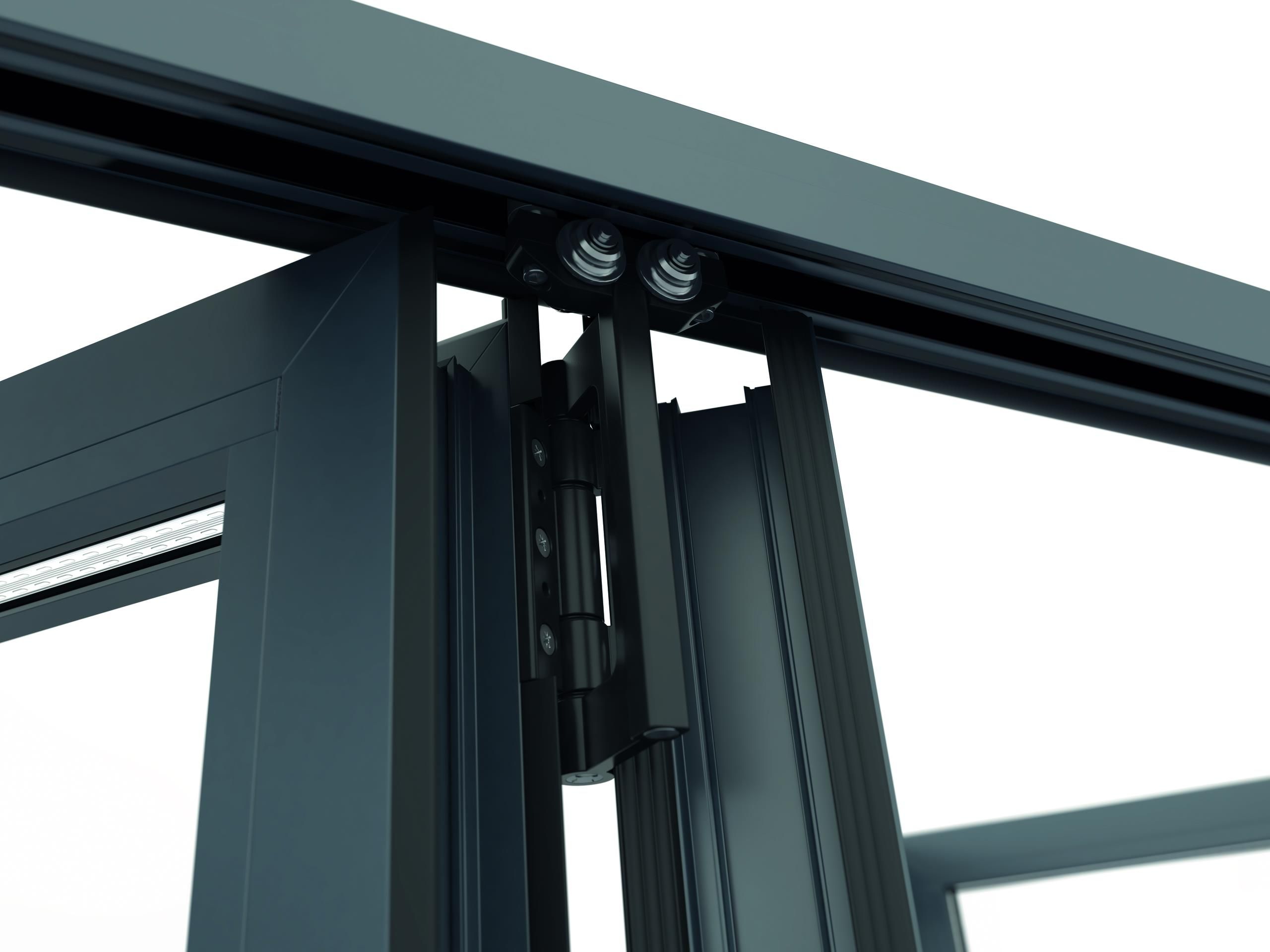
What a full perimeter seal replacement and re-set involves
A proper repair is more than pulling out an old gasket and pushing in a new one.
A full perimeter seal replacement and re-set may involve:
- Inspecting the complete doorset rather than one panel.
- Checking panel height, gaps, square and twist.
- Examining rollers, hinges, guides and glazing support.
- Identifying the correct proprietary seal profile.
- Removing damaged or unsuitable seals.
- Cleaning and preparing the seal channels.
- Fitting new gaskets continuously and correctly at corners.
- Adjusting the panels so the seals compress evenly.
- Checking the threshold and top guide contact.
- Testing the doors through opening, closing, folding and locking.
- Checking that drainage paths remain clear.
- Confirming that the repaired doorset operates without excessive force.
This is why replacing seals without correcting panel alignment often fails. A new gasket fitted to a dropped panel may be compressed heavily in one corner and barely touch in another. The result can be a draught, difficult operation or premature seal failure.

When rollers and alignment need attention
If the door drags, catches or feels heavier than usual, the running gear may be contributing to the cold-air problem. Worn or disconnected rollers can allow a panel to sit out of position, while hinge wear can change how adjoining panels meet.
Professional bifold door rollers repair should consider the complete system:
- Is the roller itself worn or damaged?
- Is the track clean, secure and correctly supported?
- Has the panel dropped because of glazing support?
- Is the frame square and within workable tolerances?
- Are the hinges placing the panels under unnecessary load?
- Will adjusting one panel transfer stress to another?
A careful bifold door alignment assessment avoids treating a single symptom in isolation.
Servicing before winter is a practical cost-saving step
An external bifold door that does not seal properly can make a room feel colder, encourage condensation and increase the amount of heat needed to maintain comfort. Small faults can also place extra strain on rollers, hinges, seals and closure hardware.
A timely service can help you:
- ✅ Restore consistent weather-seal contact.
- ✅ Reduce unwanted air movement.
- ✅ Improve day-to-day operation.
- ✅ Prolong the life of existing rollers, hinges and tracks.
- ✅ Identify condensation causes before mould or damp develops.
- ✅ Avoid unnecessary replacement of a repairable doorset.
- ✅ Receive clear advice based on the condition of your own doors.
For homeowners searching for bifold door maintenance, a bifold door specialist or bifold doors repair near me, Pro-Lock provides a diagnosis-first service. We do not sell or fit new doors, so the recommendation is focused on restoring the existing external doorset wherever a sound repair route exists.
Transparent assessment, written quote and warranty
Pro-Lock’s professional assessment costs £79. This includes an inspection of the complete external bifold doorset, operating checks and investigation of the likely cause.
You receive:
- A clear explanation of the findings.
- A written report where applicable.
- A written, itemised quotation for recommended repairs.
- The option to review the proposed work before proceeding.
- The £79 assessment fee credited against the repair cost if you go ahead.
- A 12-month warranty on completed repair work, covering workmanship and parts supplied and fitted as part of the repair where applicable.
External bifold door repair across ten counties
Pro-Lock covers exactly these ten counties:
- Norfolk
- Suffolk
- Cambridgeshire
- Bedfordshire
- Essex
- Hertfordshire
- Surrey
- Kent
- East Sussex
- West Sussex, including Worthing and the coastal areas around Chichester Harbour
London is excluded from the current service area. You can view the full areas we cover before making an enquiry.
Arrange your assessment before the cold weather settles in
If your external bifold doors have become cold, draughty or difficult to close since the heating went on, do not assume the doors need replacing. The fault may be a tired seal, panel alignment issue, worn roller or a combination of connected mechanical problems.
Contact Pro-Lock to arrange a professional assessment:
- Call 0330 311 0975
- Email enquiries@bifold-door-repair.co.uk
- Use the contact form
- Chat with Pro-Lock on WhatsApp
Restore the seal, re-set the panels and head into winter with greater comfort and peace of mind.