

The first proper autumn rain often exposes a bifold door problem that went unnoticed through summer. Leaves begin to fall, fine grit washes across the threshold and water collects in the bottom channel. A door that was merely a little stiff can quickly become noisy, heavy and difficult to move.
That does not automatically mean you need a new doorset.
For most external bifold doors (including uPVC, aluminium, timber and hybrid systems) the priority is to identify whether the problem is contamination, roller wear, bifold door alignment, drainage or genuine track damage. Correct diagnosis can mean restoring the existing doorset rather than replacing an otherwise serviceable installation.
Important: This guide covers external bifold doors only. Internal bifold doors used for wardrobes, cupboards, storage or room dividers are not covered. For specialist help, contact Pro-Lock about your external bifold door repair.
Why autumn rain makes a bottom track deteriorate
A bifold door track is a precision running surface. Rollers, guides and pivot components need to move through the channel without excessive resistance. Autumn weather introduces three problems at the same time:
- Fine grit and silt are carried onto the threshold by shoes, wind and rain.
- Leaf debris breaks down into a damp, compacted residue.
- Standing water turns loose dirt into an abrasive paste.
The result is similar to grinding paste. As the panels move, the rollers run through the contamination repeatedly. This can increase friction, mark the running surface and accelerate wear in the roller bearings.
The door may then begin to drag. That extra resistance places more strain on hinges, pivots and the frame. A small obstruction can therefore become a wider bifold door alignment fault.

What fine grit does to rollers and the bottom channel
Fine grit is particularly troublesome because it is easy to miss during a quick visual check. Larger stones are obvious, but sand-like particles settle inside the channel and around the roller contact points.
Over time, grit can:
- Wear the surface of the roller or wheel.
- Contaminate bearings and make them noisy.
- Prevent the roller from sitting squarely in its channel.
- Increase the load on adjacent panels.
- Leave dark or dirty transfer marks on the threshold.
- Contribute to a panel dropping or catching.
A roller does not always fail suddenly. It may first produce a faint grinding sound, followed by increasingly heavy movement. By the time the door becomes very difficult to open, the roller and track may both have been affected.
This is why early bifold door maintenance is more cost-effective than waiting until the doorset can no longer be operated normally.
Why water sits in the bifold door track
External thresholds are designed to manage rain, but they still depend on clear drainage routes. Water may collect when:
- Weep holes or drainage slots are blocked by leaves and silt.
- Debris has compacted inside the threshold.
- A mat, sealant or threshold covering obstructs drainage.
- The track has become distorted or settled.
- Rain is driven directly onto a low-level or exposed threshold.
- The door has a deeper build-up of dirt than can be seen from above.
A small amount of moisture after heavy rain is not necessarily a fault. The concern is water that remains pooled after the weather has cleared, particularly when it contains grit or organic debris.
Persistent standing water can leave black marks, encourage residue around the rollers and increase corrosion risk on vulnerable components. It can also make a small alignment issue progressively worse.
Warning signs your door needs attention
Do not ignore changes in the way your external bifold doors operate. Look out for:
- Gritty grinding as panels move.
- Doors becoming noticeably heavier from one opening to the next.
- A panel catching on the threshold or scraping at one point.
- Panels appearing lower, uneven or out of line.
- Water pooling in the bottom channel.
- Black marks appearing on the threshold.
- A door that moves smoothly in one direction but catches in the other.
- Repeated need to lift, push or pull a panel to make it move.
- Rollers that sound rough even after visible debris has been removed.
These symptoms can have more than one cause. Cleaning may solve a simple obstruction, but worn rollers, a distorted channel or incorrect adjustment need a more careful inspection.
What you can safely clear yourself
Homeowners can usually carry out basic cleaning without dismantling the doorset.
A safe autumn cleaning routine
Open the panels as far as they will move comfortably.
Do not force a stiff door or pull hard on individual stiles.Vacuum the full length of the bottom track.
Use a narrow nozzle to remove leaves, grit, pet hair and loose silt.Use a soft brush for compacted residue.
An old, soft toothbrush can help around corners and guide channels.Wipe the track with mild soapy water.
Use a soft, non-abrasive cloth. Avoid harsh or solvent-based cleaners that may damage finishes, seals or lubricated components.Clear visible drainage openings carefully.
Use a small plastic tool or soft brush. Do not force metal objects into drainage holes, as this can damage the channel or protective finish.Dry the running surfaces.
Remove excess moisture with a clean cloth before testing the doors.Operate the panels gently.
If they still grind, catch or require excessive force, stop rather than repeatedly working the mechanism under load.
Avoid packing the track with heavy grease. Thick products can trap more grit and create a worse abrasive paste. If your door manufacturer specifies a suitable silicone product, follow that guidance carefully and apply only a light film where appropriate.
When DIY cleaning is not enough
Cleaning will not restore a roller with damaged bearings or a track with a worn running surface. It is time to arrange an inspection when:
- The door remains heavy after the track is clean and dry.
- A panel continues to drag at the same point.
- Rollers show visible damage or excessive play.
- The track has a groove, bend, dent or lifted section.
- Water continues to pool despite clear drainage openings.
- The same panel repeatedly drops out of alignment.
- Cleaning provides only a short-lived improvement.
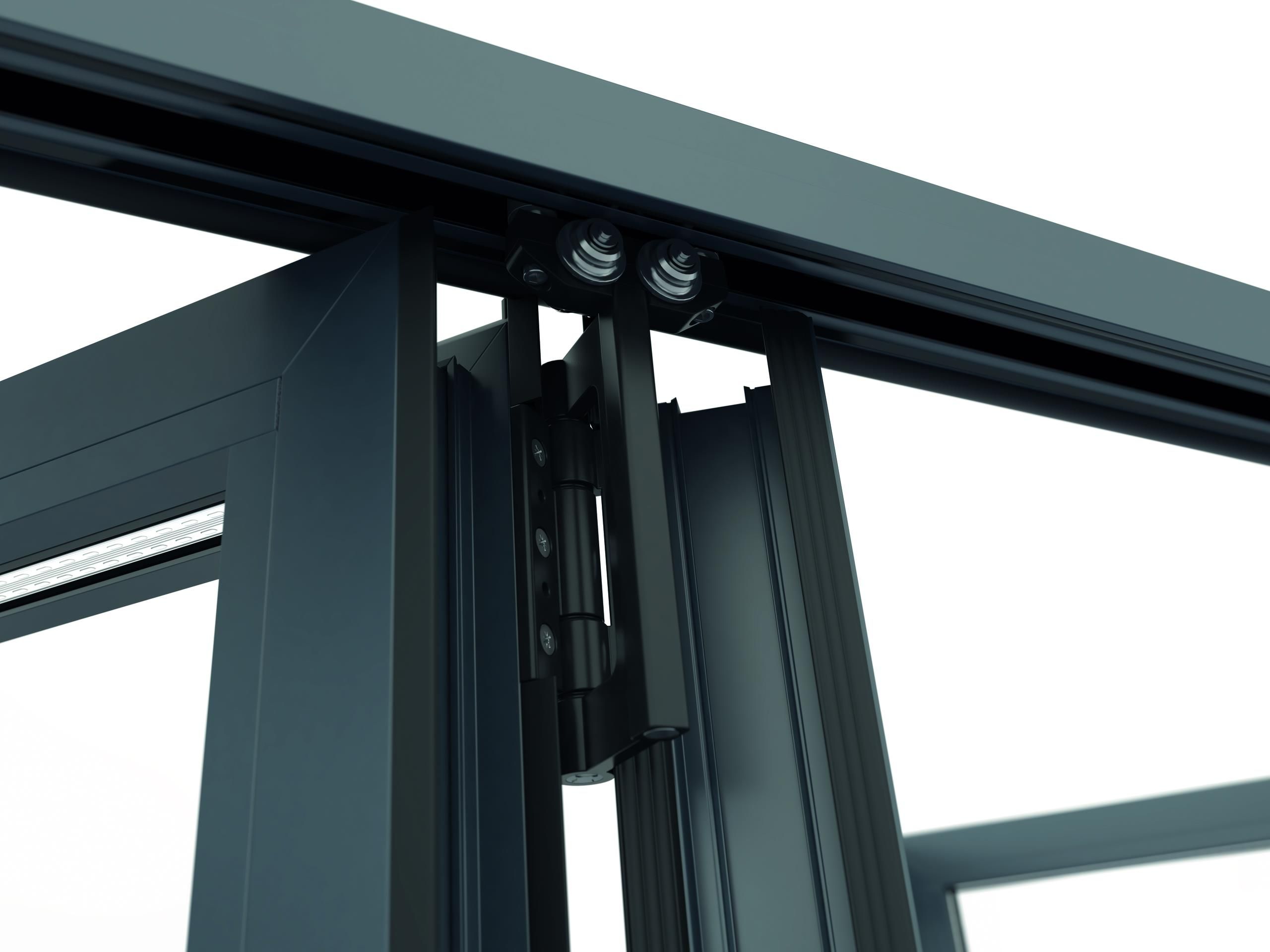
A bifold door specialist will assess the complete doorset rather than simply replacing the most visible part. The problem may involve roller height, pivot adjustment, panel geometry, toe and heel, track fixing or frame movement.
Track re-setting, roller repair or genuine track replacement?
A track does not need replacing simply because the door is dragging. In many cases, the correct remedy is to:
- Re-set the track or correct a local fixing issue.
- Restore bifold door alignment.
- Replace worn or damaged rollers.
- Re-set panel height and running clearances.
- Clear and restore drainage routes.
- Replace a limited track section or component where compatible.
Bifold door rollers repair can be particularly effective when the channel itself remains straight and secure. Replacing the rollers may reduce friction, restore smooth movement and prevent further damage to the track.
A genuine bifold door track replacement may be appropriate where the running surface is deeply worn, bent, corroded, distorted or no longer securely fixed. Even then, the track may be replaceable without replacing the glass panels, frames and complete doorset.
The technical answer depends on the system, available components and the condition of the surrounding frame. A specialist assessment should establish whether repair is practical before replacement is considered.
Why repair is often the more sensible option
Replacing a complete external bifold doorset is disruptive and expensive. It can involve new glass, frames, building work, finishing and disposal of components that may still be serviceable.
Pro-Lock does not sell new doors, so its advice is unbiased. The focus is on restoring the existing mechanism wherever a safe, durable repair route is available.
✅ Specialist knowledge of complex bifold mechanisms
✅ Repair-first advice for uPVC, aluminium, timber and hybrid doors
✅ Written, itemised quotation before any work
✅ 12-month warranty on all repair work
✅ Clear explanation of whether cleaning, adjustment, roller repair or track replacement is appropriate
The Pro-Lock repair service covers dragging panels, worn rollers, damaged tracks and alignment faults. You can also read about the assessment process before arranging a visit.
Pro-Lock coverage across ten counties
Pro-Lock provides external bifold door repair across exactly ten counties, with London excluded:
- Norfolk
- Suffolk
- Cambridgeshire
- Bedfordshire
- Essex
- Hertfordshire
- Surrey
- Kent
- East Sussex
- West Sussex, including Worthing and the coastal areas around Chichester Harbour, Crawley, Horsham, Arundel, Bognor Regis, Littlehampton, Shoreham-by-Sea and Midhurst
Arrange a £79 assessment before the track gets worse
If your external bifold door is grinding, dragging, catching or holding water, arrange an assessment before the autumn debris causes further wear.
The assessment is £79, and a written, itemised quote is always provided before any work. All repair work is covered by a 12-month warranty.
0330 311 0975
enquiries@bifold-door-repair.co.uk
Chat with Pro-Lock on WhatsApp
A clean track today may prevent a damaged roller tomorrow, and could stop a manageable repair becoming a full replacement job.