

For many homeowners, external bifold doors are used less once the weather turns cold. They stay shut through winter, then the first sunny spring day arrives, and the panels suddenly feel heavy, scrape the threshold or resist folding.
That first opening often makes months of gradual wear obvious. Disuse does not automatically ruin a doorset, but seals, rollers, guides and drainage can all suffer when the panels remain in one position for a long time.
A simple monthly routine can help. And if your doors are already dragging, a professional repair may be all that is needed: a stiff door in March often needs realignment, roller repair or both, not a complete replacement.
What can happen while bifold doors stay closed?
Bifold doors are a connected system. Panels, hinges, guides, rollers, seals and the threshold all work together. When doors are left untouched, small changes can accumulate unnoticed.
Seals remain compressed
The weather seals sit between closed panels and around the frame. When they stay compressed for months, they can gradually lose some of their ability to spring back. Dirt and moisture on the rubber can also make seals stick to adjoining surfaces.
This does not mean every seal will be permanently damaged. It does mean seals that are flattened, split or no longer sitting properly may add resistance when you first open the doors, and may need cleaning or replacement.
Rollers and guides stay under load in one position
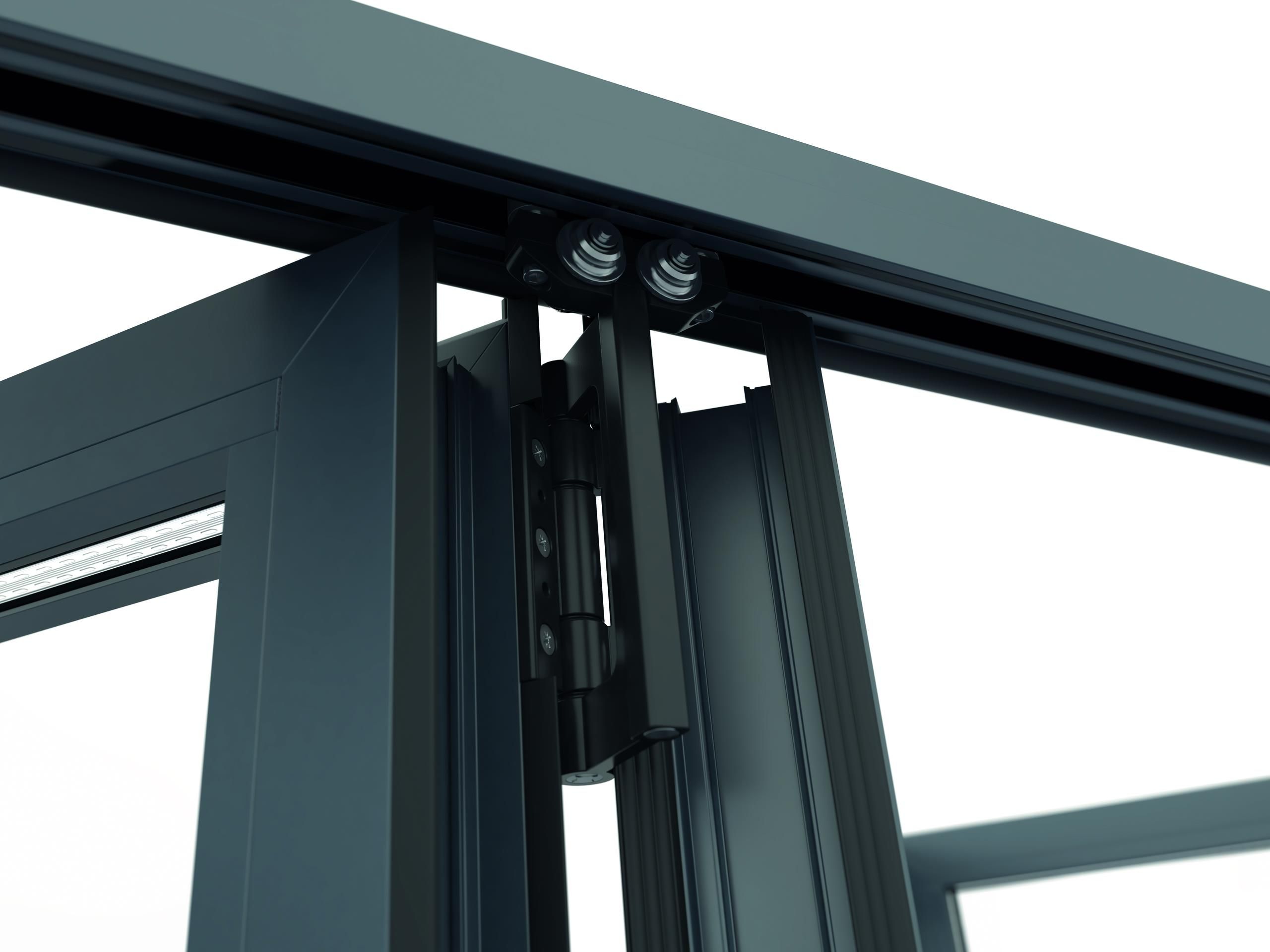
The panels’ weight rests on the running gear even when the doors are closed. If a roller remains in the same position for an extended period, wear or a flat spot can develop, particularly if the wheel is already worn or contaminated with grit.
At the same time, hinge and slider components may dry out or become stiff. A roller can also collect corrosion or debris, making it harder to turn freely. These faults may not be obvious until the panels start moving again.
The bottom channel collects dirt and water
The exposed bottom channel can gather grit, leaves and other debris throughout winter. If drainage openings are obstructed, rainwater may also sit around the threshold instead of draining away.
With no regular movement, there is nothing to disturb or reveal the build-up. A roller can meet compacted dirt, while standing moisture encourages more grime to stick to the track and nearby hardware.

Moisture can linger around the frame
Shut doors do not create mould by themselves. However, indoor moisture from everyday activities can settle on cold glass, frames, seals and threshold areas. Where air circulation is limited, dampness may linger; dust and residue can then provide a surface for mould to develop.
Wipe away surface moisture and keep the room ventilated. If you see persistent water pooling, damp frame corners or recurring mould, it is worth checking whether there is a drainage or sealing fault.
Handles and mechanisms may feel stiff
When a door has barely been operated, you may notice stiffness at the handle or a locking point only when you try to open it. If that stiffness is caused by a dropped panel or a seized mechanism, it is a mechanical fault that needs assessment and realignment.
Do not force a stiff handle. Extra pressure can put strain on connected parts without resolving the underlying cause.
Why does the problem show up on the first spring opening?
When a doorset has been sitting still, small changes can go unnoticed. The first full opening puts the panels, rollers and hinges back into motion and shows where resistance has built up.
You might notice a panel dragging, a rough or uneven movement, a handle that feels unusually stiff, or a set of panels that no longer folds smoothly. The fault may have developed gradually, but the first spring opening is when you feel it.
If you need to fix a dragging bifold door, avoid repeatedly opening and closing it with force. Resistance can transfer strain to other components and make an otherwise straightforward repair more involved.
A short winter bifold door maintenance routine
A little movement and basic care can help keep an external doorset working freely. Try this routine at least once a month through winter:
- Operate the doors gently. Open and close the panels through their normal range, if it is safe to do so. Stop if you meet unusual resistance.
- Clear and dry the channel. Remove loose grit and leaves, then wipe the bottom channel and threshold dry. Avoid pushing debris into drainage openings.
- Check the drainage path. Look for visible obstructions around the threshold and drainage outlets. If water remains after rain, arrange a closer inspection.
- Keep seals clean. Wipe them carefully and check for dirt, splits, gaps or sections that have come loose. Use cleaning products suitable for the door system.
- Notice changes early. Pay attention to new scraping, uneven movement or stiffness rather than waiting until spring to investigate.
- Never force the handle. If it feels stiff, stop. The issue may relate to panel position or a seized component, and more force will not correct it.
- Book a service before daily use returns. If movement is rough or the panels drag, get the doors checked before the first warm spell brings regular use.
Lubricants and adjustment points vary between systems, so avoid applying a general-purpose product or changing roller heights by guesswork. A bifold door specialist can identify what the manufacturer’s hardware requires and whether the issue is alignment, a worn component or something else.
Dragging does not automatically mean replacement
The best repair depends on the cause. A professional inspection can check bifold door alignment, roller condition, hinges, guides, seals, track and drainage as one system.
Depending on what is found, the repair might involve realigning a panel, re-setting the doorset or carrying out bifold door rollers repair. A bifold door track replacement should only be recommended where the track is damaged or worn beyond an appropriate repair, not simply because the door feels stiff.
Pro-Lock repairs external bifold doors made from uPVC, aluminium, timber or hybrid materials. We focus on restoring existing doors where a suitable repair is possible, rather than selling replacement doors. Read more about our bifold door repair services and how the assessment works.
Local external bifold door repair across thirteen counties
If you are looking for bifold doors repair near me, Pro-Lock covers East Sussex, Kent, Cambridgeshire, Essex, Norfolk, Suffolk, West Sussex, Surrey, Bedfordshire, Hertfordshire, Lincolnshire, Northamptonshire and Leicestershire. London is excluded.
Our service area includes Brighton, Eastbourne, Hastings and Lewes in East Sussex; Maidstone, Canterbury, Ashford and Tunbridge Wells in Kent; Cambridge, Peterborough, Ely and St Neots in Cambridgeshire; and Chelmsford, Colchester, Southend-on-Sea and Harlow in Essex.
We also cover Norwich, King’s Lynn and Great Yarmouth in Norfolk; Ipswich, Bury St Edmunds and Lowestoft in Suffolk; Guildford, Woking and Epsom in Surrey; Bedford, Luton and Dunstable in Bedfordshire; and Watford, St Albans and Stevenage in Hertfordshire. In our newer counties we cover Lincoln, Boston, Grantham and Sleaford in Lincolnshire; Northampton, Kettering, Corby and Wellingborough in Northamptonshire; and Leicester, Loughborough, Hinckley and Market Harborough in Leicestershire.
In West Sussex, coverage includes Chichester, Worthing and the coastal areas around Chichester Harbour, as well as Crawley, Horsham, Littlehampton and Bognor Regis. See our full service area for more local information.
Clear assessment, written quote and repair warranty
The Pro-Lock team assesses the complete doorset to identify the cause of the problem and recommend a proportionate repair. The assessment fee is £79, and you receive a written itemised quote before any work is carried out.
If you choose to go ahead with the repair, the £79 assessment fee is credited against the repair cost, so you do not pay for the assessment on top of the repair. The fee is also refunded if suitable parts cannot be sourced and no quote can be provided, or if the doorset is judged beyond economical repair.
All repair work comes with a full 12-month warranty covering our workmanship and any parts supplied and fitted.
Arrange an assessment
If your doors have been shut all winter and are now dragging, catching or moving unevenly, contact the Pro-Lock team before repeated use adds strain. Call 0330 311 0975, email enquiries@bifold-door-repair.co.uk, or WhatsApp us.
The assessment fee is £79. You will receive a written itemised quote before any work, and the fee is credited against the repair cost if you proceed with the repair. All repair work is covered by a full 12-month warranty on our workmanship and any parts supplied and fitted.