

A hard frost can turn a little water in an external bifold door track into a stubborn obstruction overnight. If a panel then drags, sticks or refuses to lock, forcing it may put extra strain on rollers, hinges and locking points.
The frost itself is not usually the whole problem. Ice can expose existing wear, poor drainage, tired seals or marginal alignment. Spotting those signs early can help restore smooth movement before a small issue becomes a mid-winter breakdown.
Pro-Lock specialises in repairing external bifold doors made from aluminium, uPVC, timber and hybrid materials. Internal bifold doors, including wardrobe, cupboard and room-divider doors, are not covered.
What frost can do to the track and rollers
Water from rain, melting frost or condensation can collect in a threshold track or its drainage channels. When that water freezes, ice can stop a roller turning freely or obstruct the path of a panel.
Even a thin ridge of ice can make a heavy glazed panel feel unusually stiff. If you force it, the wheel may skid or catch instead of rolling. Repeated strain can affect the roller carriage, hinges, guides and the alignment needed for the door to close and lock properly.

Watch for these signs after a frost:
- A panel catches or drags at one point in its travel.
- You hear scraping, grinding or an unusual rolling noise.
- The door is difficult to close squarely or the lock no longer lines up.
- Water remains in the track after a thaw, or an outlet appears blocked.
An ice obstruction may clear as the temperature rises. But if the door remains stiff once the track is thawed and clear, there may be a worn roller, damaged running surface or alignment issue that needs a proper assessment.
Why drainage and threshold ice matter
A bifold threshold is a working part of the doorset, not simply a strip to step over. Drainage routes help water leave the system. If debris or ice blocks an outlet, water can remain around the running gear and freeze again when temperatures drop.
Keep the track and visible drainage openings clear. Do not seal over drainage routes or pour boiling water onto a frozen threshold: sudden heat can damage finishes or components, and meltwater may refreeze elsewhere.
If your threshold remains icy or wet after the rest has thawed, check whether water is draining away as it should. Ongoing standing water or water ingress can point to a drainage, seal or installation issue that needs a closer look.
Seals and gaskets can stick or lose their fit
Flexible seals help close gaps between panels and the frame. In freezing conditions, a damp seal can stick to an opposing surface. Pulling the door open sharply may tear an already weakened gasket or pull it out of position.
Age and wear matter too. A seal that has become flattened, split, brittle or loose may not make even contact when the door is shut. Frost can make that weakness easier to notice, but replacing it with a generic strip is not always the right fix: the profile needs to suit the particular door system and should not prevent the panels from closing or locking.
Once the door has thawed, check for:
- Cracks, splits or sections pulling away from the frame.
- A flattened seal that no longer springs back into shape.
- Uneven contact between the seal and the panel.
- A section trapped, twisted or displaced along the edge.
A damaged seal can often be replaced without replacing the doorset, subject to confirming a compatible part.
Aluminium contraction and other frame materials
Aluminium does expand and contract as temperatures change. A sound, correctly installed system is designed to accommodate normal movement, so a cold snap alone does not mean the frame is damaged. However, seasonal movement can make a marginal adjustment or existing alignment fault more noticeable.
uPVC also moves as temperatures change, while timber responds to both temperature and moisture. Hybrid doors combine materials with different movement characteristics. In every case, the system’s design, installation and condition matter. If gaps change noticeably, panels bind or locks stop lining up, a specialist can check the frame geometry, panel position and hardware together.
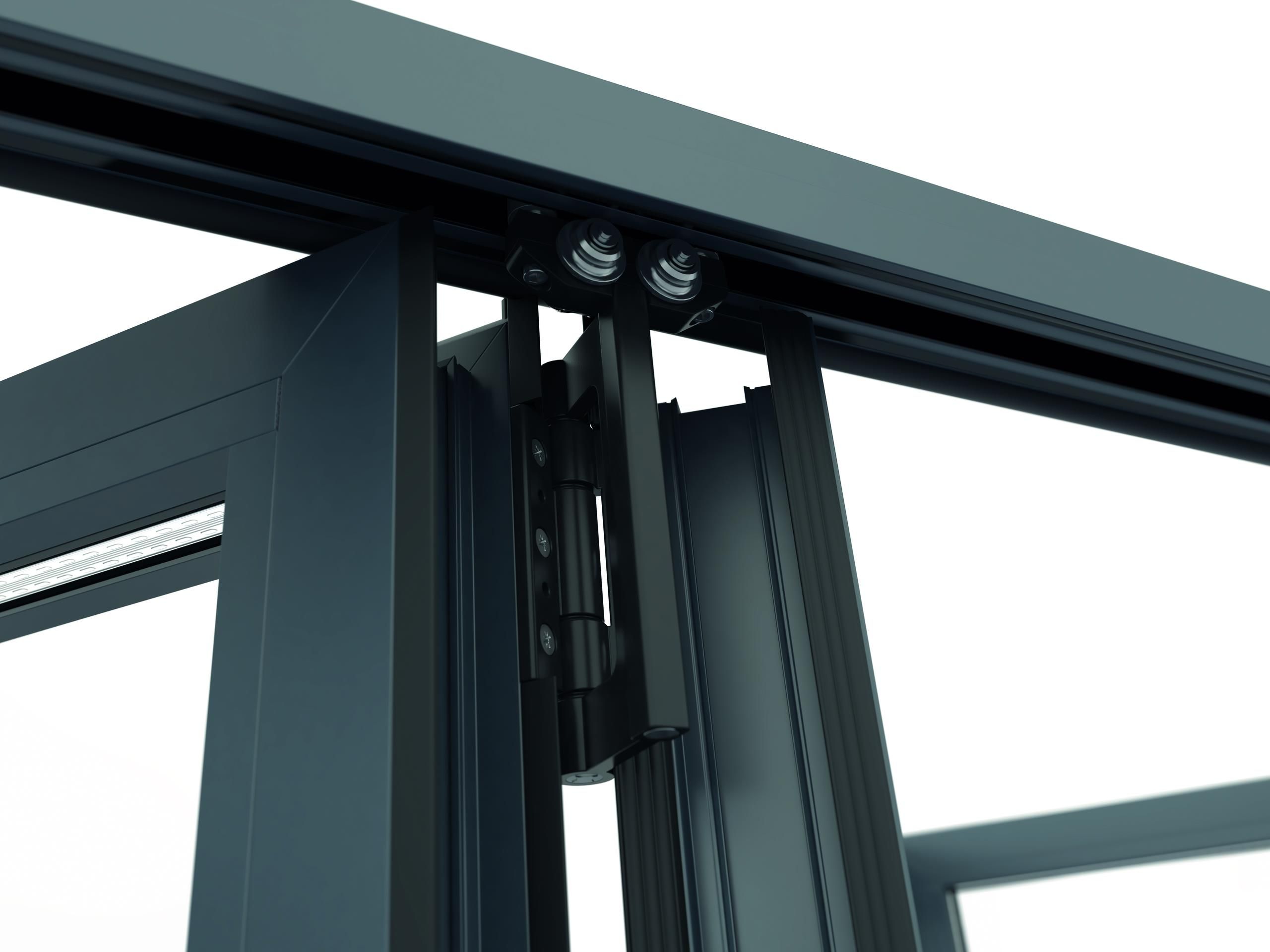
The Pro-Lock team’s assessment process checks how the panels, rollers, hinges, seals, locks, frame and drainage work as a system.
What to do if the door is frozen
A careful response can help avoid turning a temporary ice obstruction into a mechanical fault.
- Do not force the handle or panels. Stop if the door catches, grinds or will not close squarely.
- Brush away loose snow and debris. Use a soft brush or a plastic tool, not a metal scraper that could damage the track or finish.
- Let ice thaw gently. Avoid boiling water, blowtorches and concentrated heat. Follow the door manufacturer’s guidance on any de-icer.
- Wipe away meltwater. This reduces the chance of it refreezing in the track or around drainage outlets.
- Test the door gently once clear. If it still drags, catches or will not lock without force, stop and arrange an assessment.
Avoid adding oil or grease to the running track unless the manufacturer specifically recommends it. The wrong product can attract dirt or affect materials, and lubrication does not fix a worn roller or misaligned panel.
Why arranging repair before deep winter helps
A recurring catch or a handle that has become harder to operate is useful early warning, not something to leave until the door stops working altogether. In a colder spell, ice can make an existing fault harder to diagnose and can add strain when the door is operated.
An early assessment gives an engineer the opportunity to identify whether the issue is an obstruction, worn roller, alignment fault, damaged seal or blocked drainage route. Where a repair is suitable, addressing the cause can help restore dependable operation and prolong the life of your existing doorset.
Pro-Lock does not sell new doors, so our advice is focused on the repair options available for your existing external bifolds. You receive a written, itemised quote before deciding whether to proceed. The aim is to repair where practical, not recommend replacement when a targeted repair is appropriate.
✅ Specialist assessment of the complete doorset
✅ Advice based on the actual fault and compatible parts
✅ Repair-first recommendations with no new doors to sell
✅ 12-month warranty on completed repair work
Local external bifold door repair
Pro-Lock provides specialist assessment and repair across the county areas below:
Norfolk, Suffolk, Cambridgeshire, Bedfordshire, Essex, Hertfordshire, Surrey, Kent, East Sussex, West Sussex, Lincolnshire, Northamptonshire, Leicestershire, Oxfordshire, Berkshire and Hampshire.
West Sussex coverage includes Worthing and the coastal areas around Chichester Harbour. London is excluded. Check the full service area for more information.
For local support, see our pages for bifold door repair in Berkshire, bifold door repair in Hampshire and bifold door repair in Oxfordshire. We also cover searches for bifold door repairs Reading, bifold door repairs Southampton and bifold door repairs Oxford.

Assessment fee and what happens next
A £79 professional assessment is credited against the repair cost if you proceed. The fee is refunded if suitable parts cannot be sourced or the doorset is beyond economical repair.
After assessing the doorset, the Pro-Lock team explains the findings and provides a written, itemised quote for recommended work. You can review the proposed repair before deciding how to proceed. Completed repair work is covered by a 12-month warranty.
If your external bifold door is stiff after a hard frost, dragging on its track or refusing to lock, do not force it. Call 0330 311 0975, email enquiries@bifold-door-repair.co.uk, or message Pro-Lock on WhatsApp. Contact the team to discuss an assessment and the next step towards restoring smooth, secure operation.