
_edited.png)


Bifold Door Toe and Heel: The Adjustment That Fixes Dropping, Snagging and Stiff Doors
- Matt House
- 11 minutes ago
- 6 min read

If your external bifold doors have started dropping, dragging, catching or becoming difficult to lock, the underlying problem may not be the hinges or rollers. In many cases, the door panel needs to be toe-and-heeled.
Toe and heel is a specialist bifold door alignment technique that uses the glass as part of the panel’s structural support. When correctly carried out, it can restore a dropped or twisted door panel, improve the gaps around the frame and help the doors operate smoothly again.
This guide explains what toe and heel means, when it is needed, why hinge adjustment alone may not solve the problem, and when professional bifold door repair is the safer option.
What does toe and heel mean on a bifold door?
Toe and heeling, sometimes written as toe-and-heel, is the process of repositioning the glass inside the door sash using specially selected glazing packers or an integrated adjustment device.
A glazed bifold panel is not simply a frame with glass placed inside it. The glass is heavy and, when correctly packed, helps brace the panel diagonally. This helps the sash remain square rather than twisting into a parallelogram shape.
In simple terms:
The glass carries and redistributes its own weight.
Packers support the glass at carefully selected points.
The panel is held square within its frame.
The dropped or sagging edge can be lifted back into alignment.
The door is less likely to catch on the track, seals or adjacent panels.
The exact packing pattern varies between manufacturers and door systems. Some aluminium bifold doors also have a built-in toe-and-heel plate or jacking screw, which can provide limited adjustment without removing the glass.

When does an external bifold door need toe and heel adjustment?
Toe and heel is usually considered when a door panel has moved out of square. Common signs include:
1. The panel has dropped
The opening edge of the panel sits lower than it should. You may notice that the bottom rail is close to, or rubbing against, the track or threshold.
2. The door catches or snags
A panel may catch on the cill, track, frame or another panel as it opens and closes. It may feel as though the rollers have failed, although the real issue is that the sash is no longer correctly aligned.
3. The door nudges the rubber seals
If the panel is twisted, it can press against the weather seals unevenly. This may make the door feel stiff and can eventually wear or displace the seals.
4. There is a noticeable top gap
A gap may be wider at one top corner than the other. This is a useful indication that the panel is no longer square in its frame.
5. The door is hard to close or lock
Multipoint locks and shoot bolts need accurate alignment with their keeps. A dropped panel can prevent the locking points from entering correctly, making the handle stiff or stopping the door from locking securely.
✅ A bifold door that is difficult to lock should not be forced. Excessive pressure can damage the lock gearbox, handles, keeps or cylinders.
Why hinge adjustment alone is often not enough
Hinges control how a door panel is positioned in relation to adjoining panels and the outer frame. They can provide useful height, compression or lateral adjustment on some systems.
However, hinges do not necessarily correct the structural shape of the glazed sash.
If the glass has settled, or the panel has become racked, changing the hinge position may only move the problem from one area to another. You might temporarily improve one gap while creating:
A new gap at the opposite corner.
Increased pressure on the seals.
More strain on the rollers or hinge screws.
Poor alignment between the lock and keeps.
Uneven contact with the top or bottom track.
Toe and heel addresses the panel itself. It restores the diagonal support created by the glass and packers, while hinge and roller adjustments can then be used for final alignment.
A proper bifold door alignment assessment should therefore consider the complete system, including:
Glass packing and sash squareness.
Hinges and hinge fixings.
Rollers, carriages and guide hardware.
Top and bottom tracks.
The outer frame and threshold.
Locking mechanisms and keeps.
Seals, gaskets and magnets.
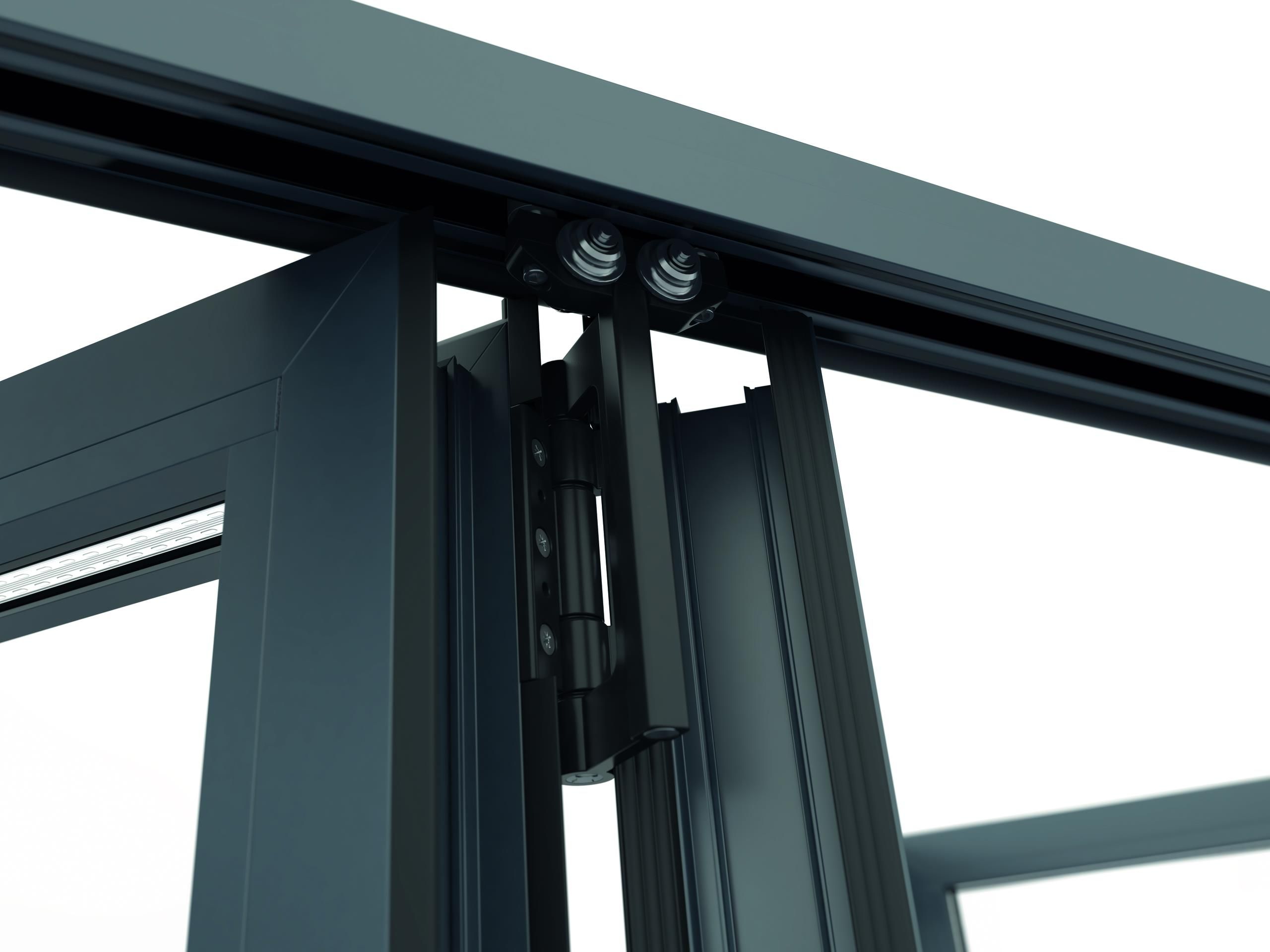
How toe and heel is carried out
There are two main approaches, depending on the bifold door manufacturer.
Glazing packers
With this method, the glazing beads and gasket are carefully accessed so the glass can be supported at the correct points.
The general principle is:
Identify the dropped corner of the panel.
Support the glass at the appropriate bottom corner.
Add support at the diagonally opposite top corner.
Use the glazing paddle to make small, controlled corrections.
Refit the beads and gasket correctly.
Test the panel and make any necessary fine adjustments.
The packers need to support the glass without placing excessive pressure on it. Improvised wedges or incorrectly positioned packers can damage the glass unit, distort the frame or leave the panel unstable.
The work is normally completed panel by panel, starting at the panel connected to the jamb and progressing towards the traffic door. Wider sets may need a carefully planned packing pattern across several panels.
An integrated toe-and-heel adjustment device
Some aluminium bifold systems include a toe-and-heel plate or jacking screw in the top of the door sash. This may allow limited adjustment using an Allen key.
The adjustment must be made gradually, with the doors tested after each small change. Manufacturer limits are important. For example, some systems specify only a limited number of turns before further correction must be made to the outer frame instead.
Do not assume that every bifold door uses the same adjustment method. The location of the device, direction of adjustment and permitted range can differ between brands and models.
Can you toe and heel a bifold door yourself?
A homeowner can carry out basic checks, but full toe-and-heel work is not a straightforward DIY adjustment.
You can safely inspect:
Whether the bottom rail is dragging.
Whether the top gaps are uneven.
Whether the track is visibly obstructed.
Whether the door closes without excessive force.
Which panel appears to be out of line.
Whether the locking points engage normally.
You should avoid removing glazing beads or handling large sealed glass units unless you have the correct equipment, training and support. External bifold glass can be heavy, awkward to handle and expensive to replace.
Call a professional if:
The glass needs to be removed or re-packed.
The panel is substantially dropped.
The door is catching heavily on the track or frame.
The lock will not engage.
The frame or threshold may have moved.
Rollers, hinges or tracks also appear worn.
The door is timber, hybrid or an unfamiliar system.
You are unsure which corners require packing.
✅ A specialist will correct the cause rather than repeatedly adjusting the visible symptom.
Toe and heel versus full bifold door replacement
A dropped or stiff bifold door does not automatically need replacing. In many cases, the original panels and frame can be restored through accurate alignment, servicing and replacement of worn components.
A repair-first approach may include:
Toe-and-heel adjustment.
Hinge adjustment or replacement.
Roller and carriage repairs.
Track cleaning or repair.
Lock and keep alignment.
Cylinder upgrades.
Seal and gasket replacement.
Frame and threshold assessment.
At Pro-Lock, we do not sell new doors, so our advice is unbiased. We assess whether the existing external bifold door can be repaired economically and provide a written quotation before work begins.
Pro-Lock pricing, payment and warranty
Every repair starts with an engineer assessment visit.
Assessment fee: £79
The fee is fully refundable against any repair you choose to proceed with.
You receive a clear, written quotation before repair work begins.
There are no hidden charges.
Payment is taken only after the repair has been completed to your satisfaction.
Completed repair work is covered by Pro-Lock’s 12-month warranty.
The final repair price depends on the door’s material, configuration, number of panels, access requirements and any additional parts required. Toe and heel adjustment may be combined with roller, hinge, track or locking repairs where the inspection identifies related faults.
External bifold door repair across six counties
Pro-Lock provides specialist external bifold door repair, servicing and alignment across:
Norfolk: Norwich, King’s Lynn, Dereham, Swaffham, Fakenham, Downham Market, Diss and Thetford.
Suffolk: Ipswich, Bury St Edmunds, Lowestoft, Stowmarket, Newmarket, Felixstowe, Beccles and Woodbridge.
Cambridgeshire: Cambridge, Ely, Huntingdon, St Ives, St Neots and Soham.
Essex: Chelmsford, Colchester, Southend-on-Sea, Brentwood, Basildon, Braintree, Harlow, Clacton, Maldon, Witham, Epping and Billericay.
Kent: Maidstone, Canterbury, Ashford, Tunbridge Wells, Dartford, Sevenoaks, Gravesend, Whitstable, Margate and Folkestone.
East Sussex: Brighton, Eastbourne, Hastings, Bexhill-on-Sea, Lewes, Uckfield, Hailsham, Crowborough, Battle and Rye.
You can see the wider coverage area on our external bifold door repair areas page.
Get your bifold doors realigned
If your external bifold doors are dropping, snagging, nudging the rubbers or becoming difficult to close and lock, toe and heel may be the adjustment they need.
Do not force the handles or assume that replacement is the only answer. Contact the Pro-Lock team for a specialist assessment and clear advice.
✅ Call 0330 311 0975 ✅ Email enquiries@bifold-door-repair.co.uk ✅ Request an assessment visit online
Restore the alignment, security and smooth operation of your external bifold doors with a repair-first specialist.
Further reading
Please note: Pro-Lock repairs external bifold doors made from aluminium, uPVC, timber or hybrid materials. Internal bifold doors, including wardrobe, cupboard and room-divider systems, are not covered.
Comments